
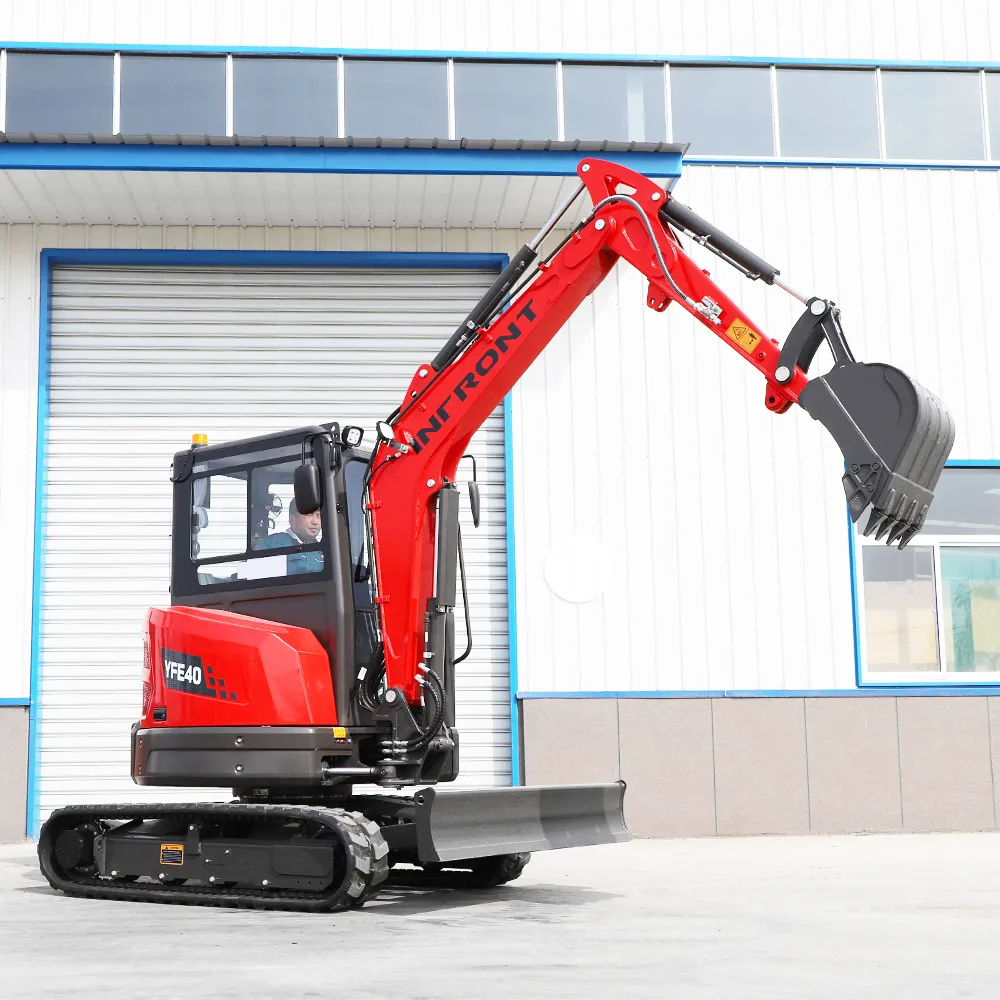
Managing a modern job site is a continuous balancing act between shrinking project timelines and unpredictable urban spaces. Whether you are running a regional equipment rental fleet in the Midwest or overseeing tight utilities installation in a historical European city center, the equipment you choose dictates your profit margins. While massive heavy earthmovers still hold their ground on open mining sites, the real heavy lifting in urban development, landscaping, and specialized contracting is being done by a much more agile asset. Understanding why a hydraulic mini excavator has become the go-to tool for seasoned contractors requires looking beyond standard spec sheets and examining how these machines perform under real-world, high-pressure field conditions.
Navigating the structural constraints of modern job sites
The reality of modern infrastructure development is that space has become a premium commodity. Traditional full-sized excavators often find themselves paralyzed when backed into a tight residential alley or positioned alongside live traffic lanes. This is where a compact mini excavator alters the dynamic entirely. Engineered with a reduced or zero-tail-swing radius, these agile units allow operators to execute full 360-degree rotations without the constant anxiety of counterweight collisions against structural walls or oncoming vehicles.
In field operations, such as trenching for fiber-optic lines right next to historical masonry, a zero-tail-swing mini excavator works with surgical precision. The machine can sit parallel to a foundation and dig cleanly, keeping the job site footprint incredibly small. This tight maneuverability does not just protect surrounding property from accidental structural damage; it eliminates the costly logistics of securing multi-lane road closures or extensive site preparation permits, keeping your project moving forward without administrative delays.
Demystifying the power mechanics of advanced hydraulic loops
There is a common misconception among newcomers to the machinery market that a smaller machine translates directly to compromised digging capability. However, expert fleet mechanics know that digging efficiency is not a function of sheer machine weight, but rather a direct result of hydraulic system optimization. Modern mini excavator engineering relies on highly advanced, variable-displacement axial piston pumps and load-sensing hydraulic circuits that actively monitor and distribute oil flow precisely where it is demanded.
When an operator encounters unexpected underground obstacles, like hard clay or compacted rocky backfill, the load-sensing system automatically adjusts hydraulic pressure while maintaining smooth engine RPM. This advanced multi-functioning capability means you can travel, lift the boom, and curl the bucket simultaneously without experiencing that frustrating, jerky hydraulic drop-off common in low-end equipment. According to technical documentation from leading international fluid dynamics associations, a finely tuned hydraulic layout allows a 2-ton or 3-ton mini excavator to deliver breakout forces that rival much older, bulkier 5-ton conventional machines, maximizing every single kilowatt of engine output.
Analyzing the genuine total cost of ownership and fleet logistics
From a strict B2B procurement standpoint, asset evaluation always comes down to the total cost of ownership and speed of deployment. Heavy excavators demand specialized low-boy transport trailers, massive commercial haul trucks, and often costly wide-load highway permits just to get from the yard to the job site. A compact mini excavator completely rewrites these logistics. Weighing within categories that fit comfortably onto standard utility trailers, these machines can be easily towed by standard commercial pickup trucks.
This transport agility allows rental houses and contractors to shift assets between multiple job sites within a single afternoon, dramatically boosting equipment utilization rates. Furthermore, the operational overhead is significantly lower. Small displacement diesel engines, especially those refined to meet rigid emissions standards, burn a fraction of the fuel consumed by large-scale crawlers. With simplified maintenance access to main control valves, filters, and hydraulic lines, the routine service windows for a mini excavator are short and straightforward, reducing shop hours and maximizing uptime where it matters most: in the dirt.
Transforming a single platform into a multi-tasking workhorse
A piece of machinery that only performs one specific task is a luxury that modern, lean contracting businesses cannot afford. The real commercial value of a modern hydraulic mini excavator is realized through its role as a versatile tool carrier. Thanks to auxiliary hydraulic lines routed directly down the boom, operators can swap out a standard digging bucket for an array of specialized attachments in a matter of minutes.
Equipping a mini excavator with a hydraulic breaker converts it into a concrete demolition unit; swapping to a high-torque auger makes it a post-hole digger for utility fencing; attaching a hydraulic thumb allows it to clear heavy land debris or place large boulders for advanced landscaping. Instead of capitalizing three different specialized machines and paying for their separate maintenance upkeep, a fleet owner can use one reliable mini excavator base platform to bid on diverse contracts across demolition, agricultural development, and municipal work, drastically accelerating the path to full asset amortization.
Meeting stringent international standards and reducing surface damage
Operating in sensitive environments requires a machine that respects both local environmental regulations and the physical integrity of the existing landscape. Full-sized heavy steel tracks exert immense ground pressure, instantly destroying turf, tearing up asphalt, and fracturing concrete curbs. A premium mini excavator configured with durable, reinforced rubber tracks spreads its operating weight across a wide surface area, dropping ground pressure down to levels that leave delicate lawns, golf courses, and paved suburban driveways completely unmarred.
Beyond surface protection, internal engineering compliance is critical for modern regulatory approvals. Overseas markets, particularly within North America and the European Union, enforce uncompromising environmental mandates regarding diesel emissions and workplace noise levels. Integrating power units that comply strictly with EPA Tier 4 Final and Euro Stage V regulations ensures that a mini excavator can work seamlessly within strict low-emission zones, urban hospital districts, and quiet residential neighborhoods at dawn without risking heavy municipal non-compliance fines.
Aligning operator comfort with high-yield productivity
An overlooked variable in equipment performance is the long-term comfort of the person sitting in the operator seat. High operator fatigue leads directly to slower cycle times, inaccurate grading, and increased safety risks on busy job sites. The latest generations of compact machinery put a heavy emphasis on cabin ergonomics, replacing stiff mechanical linkages with ultra-smooth, pilot-operated joystick controls that respond to subtle wrist movements rather than physical muscle strain.
Stepping inside a well-designed mini excavator cab reveals adjustable suspension seating, wide-angle panoramic visibility through expansive safety glass, and optimized vibration-dampening mounts under the floor structure. When a business provides an operating environment that minimizes physical strain and keeps the operator alert throughout an eight-hour shift, the immediate result is an increase in daily earthmoving volume and a cleaner, safer, more precise finished grade.
Securing global operational resilience through robust manufacturing
Ultimately, the long-term success of an earthmoving fleet depends heavily on the caliber of manufacturing and the global supply chain infrastructure supporting the equipment. This is exactly where Infront has established a formidable global footprint. Known across the heavy machinery sector for integrating advanced robotic chassis welding, precise hydraulic pressure testing, and world-class quality control protocols, Infront designs compact equipment engineered specifically to withstand the brutal, repetitive stresses of heavy-duty commercial applications.
By ensuring that critical wear points are reinforced with high-tensile structural steel and that international parts interchangeability is integrated from the initial blueprint stage, Infront provides global distribution networks, rental partners, and commercial buyers with reliable machinery and rapid component availability. Investing in this caliber of engineering guarantees that your equipment remains on the job, backed by an efficient global supply chain that keeps your operational downtime to an absolute minimum.
Table of Contents
- Navigating the structural constraints of modern job sites
- Demystifying the power mechanics of advanced hydraulic loops
- Analyzing the genuine total cost of ownership and fleet logistics
- Transforming a single platform into a multi-tasking workhorse
- Meeting stringent international standards and reducing surface damage
- Aligning operator comfort with high-yield productivity
- Securing global operational resilience through robust manufacturing