
Concrete Barn Wear and the Operational Bottlenecks of Skid Steers
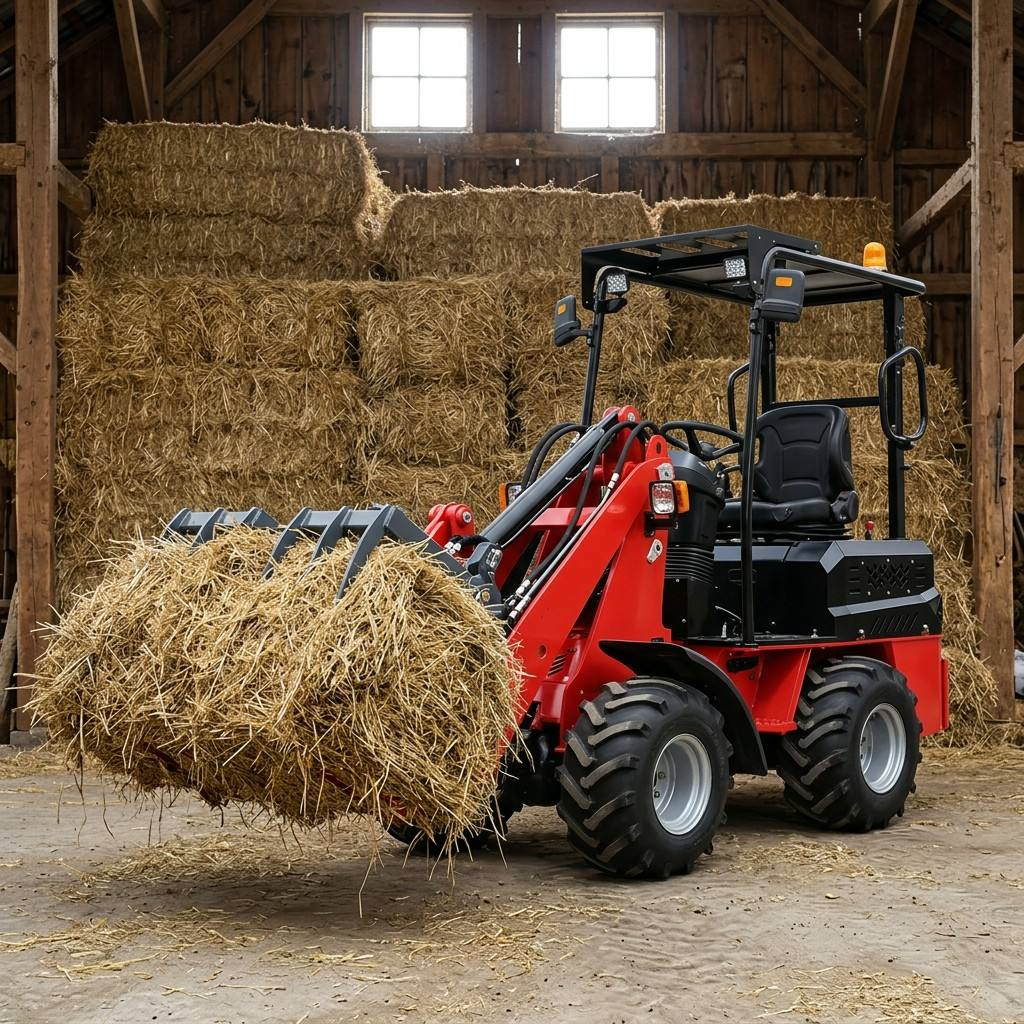
Running a commercial 1,200-head dairy facility demands relentless material handling across narrow feeding alleys and slippery scraped concrete. For years, the facility relied on mid-size skid steer loaders to push manure, distribute bedding, and load total mixed ration mixers. Over time, herd expansions turned those rigid-frame machines from handy yard tools into severe operational bottlenecks. Skid steer loaders pivot by dragging their tires across the concrete slab under forced counter-rotation. Inside working barns, that continuous scrubbing action chewed off tire tread blocks every 400 to 450 operating hours, gouged expensive anti-slip floor grooving, and sent harsh driveline vibrations straight through operator seats.
Beyond structural floor degradation, the mechanical architecture of compact rigid machines restricted working visibility. A seated operator sits low between tall lift arms, blind to livestock gates and cattle moving along alley margins. Maneuvering around steel headlocks required constant stop-and-go jockeying, driving up fuel burn while delaying critical morning feeding schedules. Farm management realized these chore delays were mechanical rather than logistical. Replacing rigid scuffing with articulated steering led the operations team to evaluate a purpose-built compact wheel loader capable of navigating tight free-stall quarters without grinding tires against abrasive concrete.
Hydraulic Starvation on Continuous-Duty Feed and Bedding Implements
A farm loader is only as productive as the hydraulic oil powering its business end. Modern livestock protocols have evolved far beyond scooping loose grain with a basic bucket. Daily operations at the facility depend on heavy motorized attachments: a 2.1-meter hydraulic silage defacer, a high-throw sawdust bedding spreader, and a heavy-duty rotary stall brush. When mounted on standard utility machines, these attachments struggled. Auxiliary relief valves continually bypassed hot fluid because the base hydraulic pump could not deliver sufficient flow while simultaneously propelling the machine forward.
The mechanical cost of this hydraulic starvation was immediate. Low drum speeds on the silage defacer tore open ragged, loose pockets across bunker faces instead of cutting clean vertical shears, triggering aerobic spoilage that ruined tons of fermented feed every month. Curing this problem required migrating to a specialized high-flow wheel loader. By selecting an articulated wheel loader equipped with a dedicated high-flow auxiliary circuit, the farm decoupled attachment performance from ground travel speed. The high-flow wheel loader delivers continuous fluid power directly to hydraulic drive motors, keeping the defacer drum spinning at full cutting torque even while the operator creeps forward at fractions of a kilometer per hour.
Articulated Steering Kinematics Versus Rigid Skid Scrubbing
The mechanical advantage of an articulated compact wheel loader over a skid steer begins right at the ground contact patch. An articulated machine steers through a central oscillating hinge pin rather than forced tire slip. Both front and rear axles follow identical turning radii, rolling smoothly through 90-degree alley intersections without tearing rubber or breaking concrete expansion joint edges. On working dairies, trading tire skid for articulated rolling eliminates tire scrub entirely, safeguarding newly poured alley slabs and cutting annual yard tire replacement expenditures by more than two thirds.
Center articulation delivers an equally critical traction advantage inside slick livestock pens. When traversing uneven manure storage aprons or driving over elevated silage bunker ramps, the central oscillating joint on the wheel loader twists up to 12 degrees in either direction. This keeps all four tires planted firmly on the driving surface, preventing wheel hop and maintaining solid drawbar push through packed wet manure. Operators running the articulated wheel loader no longer suffer the violent fore-and-aft pitching typical of short-wheelbase rigid machines. The cushioned, stable ride keeps operators alert throughout long twelve-hour shifts, directly boosting overall farm handling safety.
Dedicated High-Flow Circuitry and Reversible Barn Thermal Management
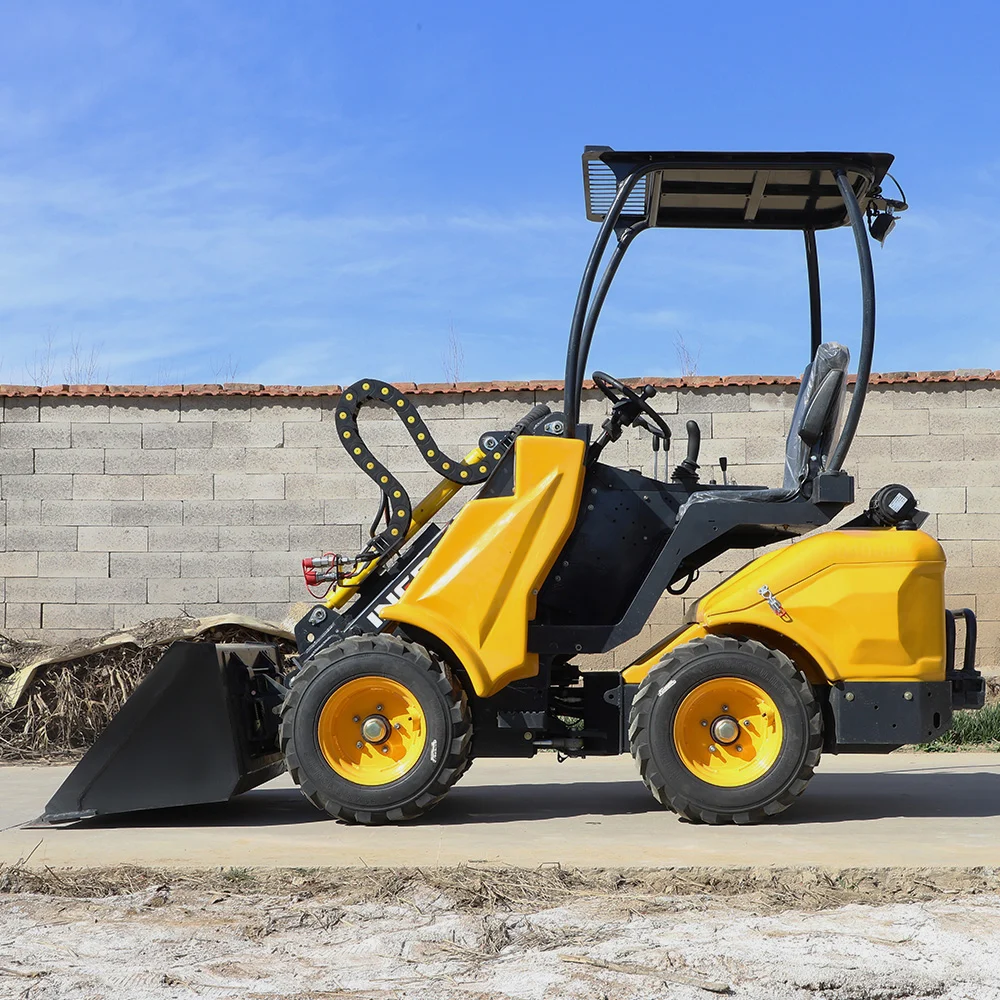
Agricultural dust degrades hydraulic systems faster than almost any other operating condition. Inside closed cattle barns, ambient air stays thick with airborne silage chaff, bedding sawdust, and corrosive ammonia vapors. When evaluating industrial equipment manufacturers to replace the aging fleet, the farm's operations team examined the agricultural configurations engineered by Shandong Infront Machinery. Management selected their high-flow compact wheel loader lineup because their hydraulic and cooling designs target harsh, high-debris operating environments.
Instead of running heavy implements through a shared priority divider, the high-flow wheel loader carries a dedicated high-output gear pump supplying over 85 liters per minute at 210 bar working pressure. An electro-proportional thumb roller on the main pilot joystick lets operators fine-tune attachment speed on the fly without revving the diesel engine to its governed limit. To conquer airborne dust, the cooling pack on the wheel loader features wide-spaced aluminum radiator fins paired with an automated hydraulic reversing fan. Every thirty minutes, the fan automatically flips blade rotation for twenty seconds, blasting caked straw, dust, and chaff clean off the intake screen. This continuous thermal purge prevents oil overheating, keeping the wheel loader running within safe operating temperatures through sweltering midsummer heat.
Measurable Time Reductions Across Daily Feeding and Bedding Chores
Switching primary chore duties to the high-flow wheel loader delivered immediate, documented gains on the facility's production ledger. Silage clamp management showed the most dramatic improvement. Thanks to steady hydraulic output, the high-flow defacer on the wheel loader shaves an airtight, glass-smooth face down a twelve-foot bunker in a single continuous pass. What used to take two workers over an hour every morning now takes one operator just 28 minutes using the high-flow wheel loader, entirely stopping secondary fermentation losses along the silage face.
Bedding distribution inside the free-stall barns improved just as rapidly. Carrying a high-capacity sawdust spreader, the nimble wheel loader threads through narrow cow alleys, tossing fresh, uniform bedding deep under resting stalls with minimal airborne dust. Furthermore, roading speeds of up to 25 kilometers per hour allow the compact wheel loader to sprint between distant calf hutches and the central manure lagoon in a fraction of the time required by crawler or skid machinery. Across total weekly operations, the farm logged a net reduction of 15.5 machine operating hours. By deploying the efficient wheel loader, farm labor was redirected away from routine machinery operation toward vital herd health checks and reproductive management.
Total Cost of Ownership and Documented Capital Payback
Procuring heavy machinery for a working farm always boils down to lifetime operational math. While purchasing an industrial-grade compact wheel loader required a slightly higher initial capital outlay than a base utility machine, the resulting drop in daily operating expenses paid off rapidly. Within the first twelve months of deployment, tire replacement expenditures fell by 68 percent. Because the wheel loader rolls around turns instead of grinding tread against concrete, tire carcass service life stretched from 450 hours to well over 1,600 operating hours.
Fuel efficiency figures proved just as convincing to the facility's finance team. The load-sensing hydrostatic transmission on the wheel loader matches engine power directly to tractive load, avoiding the parasitic heat losses of continuous relief bypass. Handling identical tonnages of wet cattle manure, the wheel loader burned 3.1 fewer liters of diesel per operating hour compared to the retired fleet. Routine preventative maintenance is equally streamlined: a fully tilting engine hood on the wheel loader grants ground-level access to fluid filters, hydraulic sight gauges, and the battery disconnect switch. Lower fuel consumption, eliminated tire scrub, and reduced chore hours allowed the wheel loader to deliver complete capital payback on its acquisition premium within fourteen months of arrival.
Farm Equipment Sourcing Guidelines for Commercial Livestock Operations
Selecting the right loading equipment for intensive livestock production requires looking past nominal engine horsepower and examining real-world machine geometry, hydraulic capacity, and serviceability. When sourcing an agricultural wheel loader, farm managers must verify that the machine profile clears low barn eaves while retaining enough hinge-pin height to dump cleanly over high-sided feed mixing wagons. Investing in an integrated hydraulic quick-coupler on the wheel loader is equally essential, letting operators cycle between silage grabs, bale spears, manure pushers, and rotary sweepers without ever stepping out of the cab.
Equally vital is choosing an equipment manufacturing partner with deep customization capabilities and direct engineering support. Deploying an articulated wheel loader built with heavy-duty cast articulation joints, induction-hardened pivot pins, and certified ROPS/FOPS operator cabins ensures the machine stands up to years of corrosive manure handling. By investing in a purpose-built high-flow compact wheel loader, commercial livestock operations can permanently eliminate chore bottlenecks, reduce operating overhead, and build a dependable mechanical foundation for future herd expansion.
Table of Contents
- Concrete Barn Wear and the Operational Bottlenecks of Skid Steers
- Hydraulic Starvation on Continuous-Duty Feed and Bedding Implements
- Articulated Steering Kinematics Versus Rigid Skid Scrubbing
- Dedicated High-Flow Circuitry and Reversible Barn Thermal Management
- Measurable Time Reductions Across Daily Feeding and Bedding Chores
- Total Cost of Ownership and Documented Capital Payback
- Farm Equipment Sourcing Guidelines for Commercial Livestock Operations