Best Skid Steer Loader Manufacturer: A 2026 Buyer's Guide to Factory-Direct Sourcing
Short answer: The best skid steer loader manufacturer is the one you can verify directly — a real factory with documented quality control, honest specifications, and reliable after-sales support.
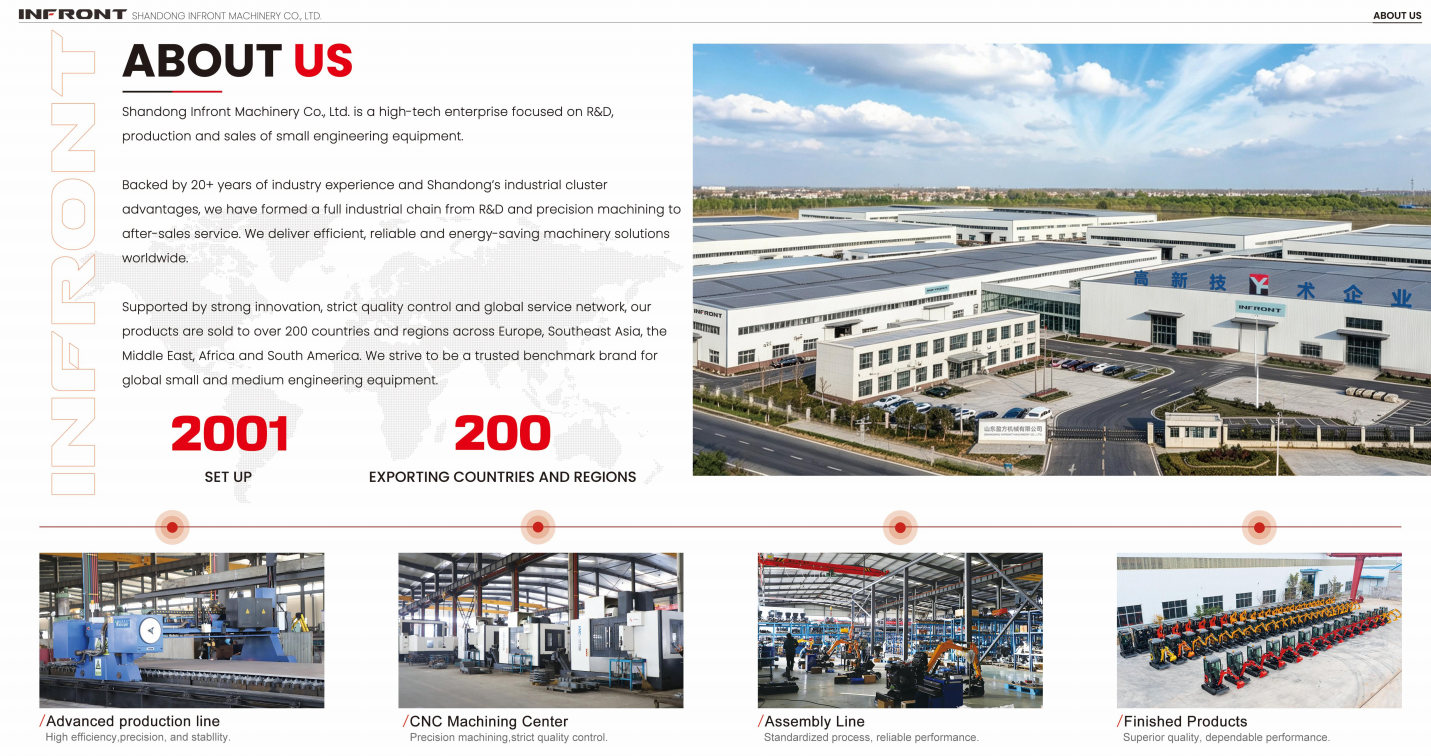
factory-direct compact-equipment manufacturers such as INFRONT compete on price, customization, and OEM/ODM flexibility. Before you commit, audit the factory: confirm it manufactures rather than trades, check its testing and compliance practices, verify the rated operating capacity and lift design in writing, and test the after-sales response with a trial order.
Why Skid Steer Loaders Are More Relevant Than Ever
The skid steer loader has been a workhorse of compact construction since 1957, when brothers Cyril and Louis Keller built the first three-wheeled loader in Rothsay, Minnesota, to clean out a turkey barn. By 1962 the machine had become the Bobcat, and today skid steer loaders are produced by most major equipment makers, including Bobcat, Caterpillar, Case, John Deere, JCB, Komatsu, Kubota, Takeuchi, Volvo, and Yanmar (Wikipedia — Skid-steer loader).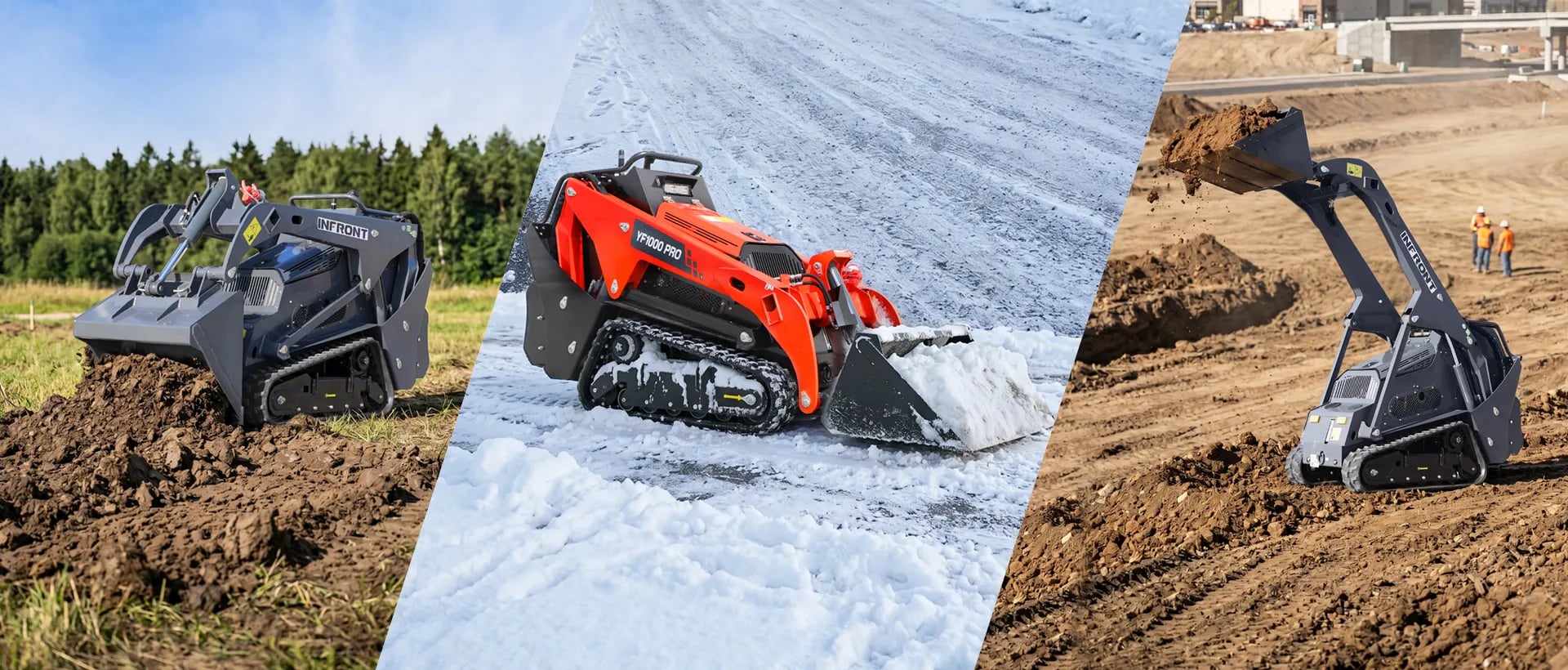
Three trends are reshaping the segment in 2026:
Urban and confined worksites — zero-turn capability lets skid steers turn within their own length, making them the default machine for tight job sites, snow removal, and indoor work.
Electric models — zero-emission electric skid steers have entered the market for indoor, urban, and noise-sensitive environments.
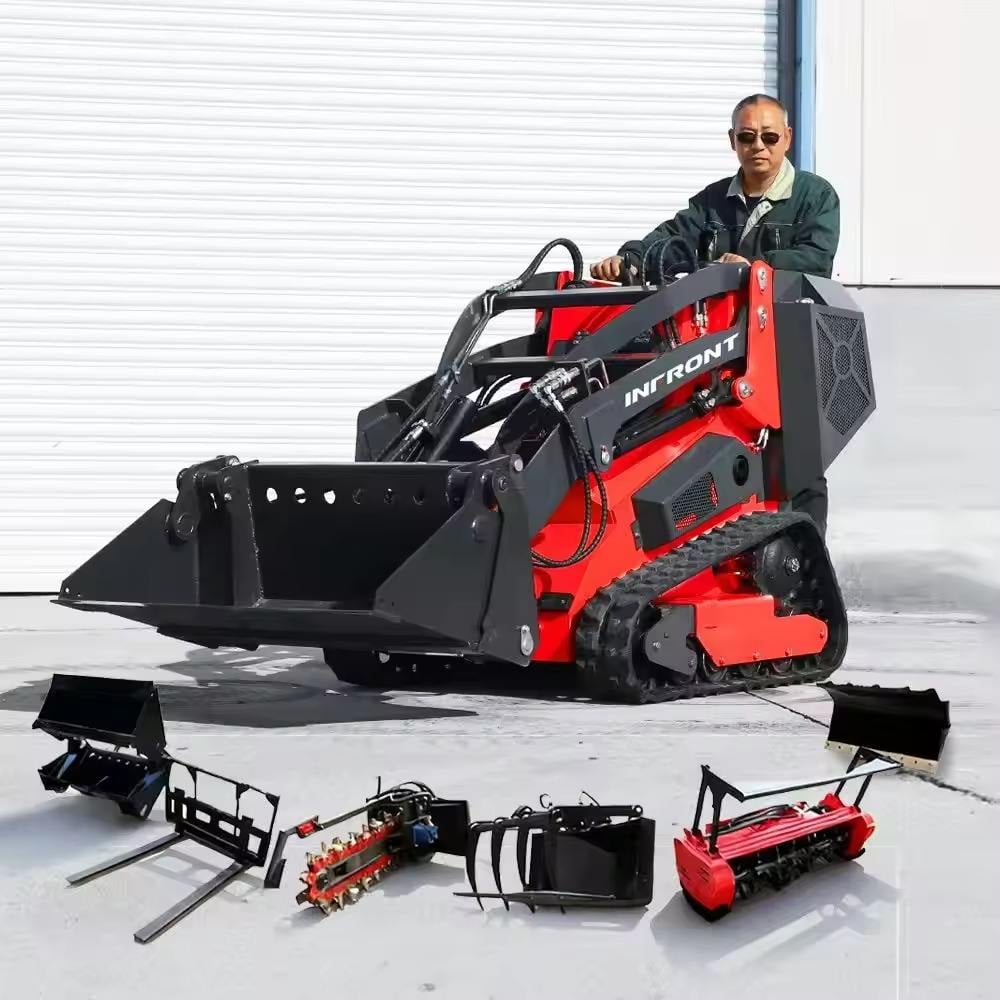
Attachment ecosystems — from buckets and pallet forks to augers, trenchers, grapples, and snow blowers, one machine now replaces an entire fleet.
The broader excavator market — valued at USD 65.2 billion in 2025 and projected to reach USD 102.4 billion by 2036 — shows how fast compact equipment is growing (Transparency Market Research). For buyers, this growth means two things: supplier quality varies widely, and sourcing directly from a manufacturer has become the standard way to control cost, quality, and brand.
How to Evaluate a Skid Steer Loader Manufacturer: 7 Criteria That Actually Matter
1. Factory or trading company? Verify the source
Many online "manufacturers" are trading companies reselling machines from multiple plants. A factory-direct supplier controls quality, pricing, and lead times; a trader cannot.
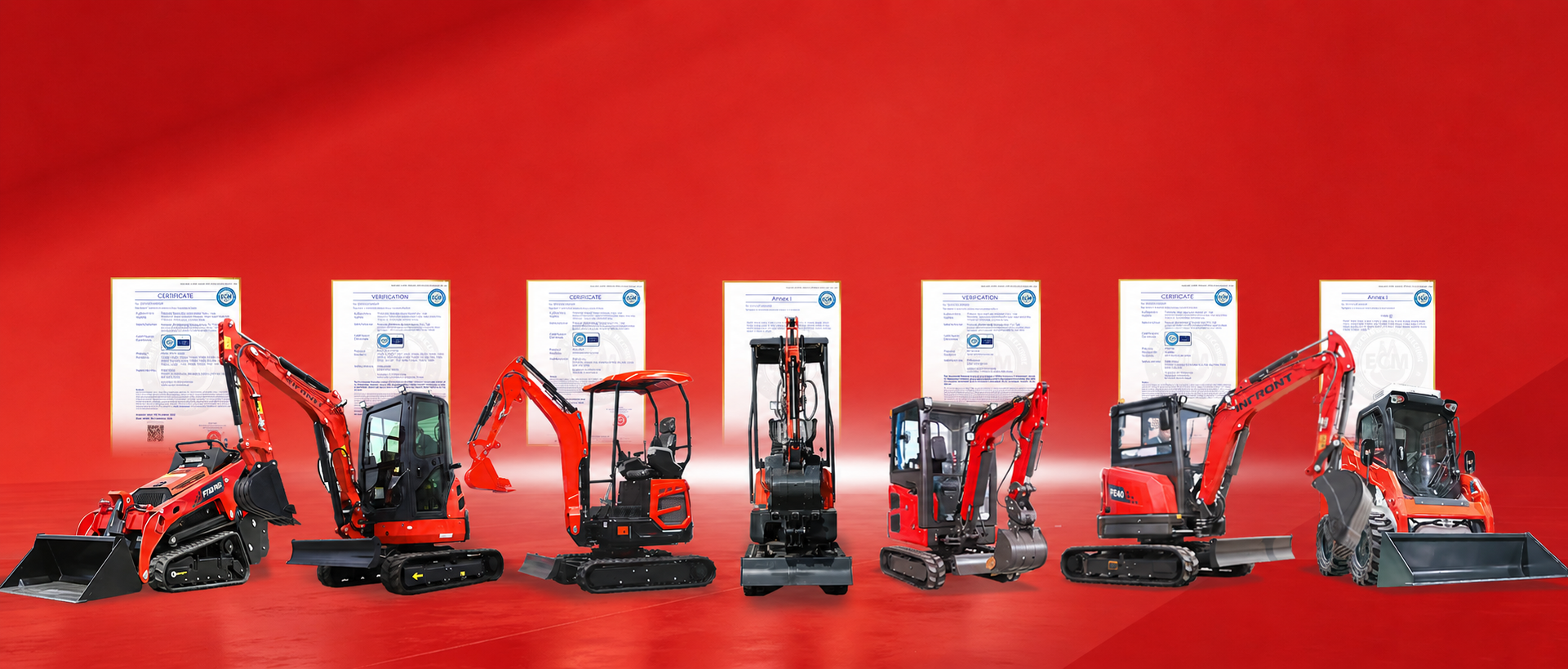
How to verify: request factory photos and live video calls, confirm the business registration matches the product brand, and check that the product range is consistent. A genuine compact-equipment factory typically produces related machines — for example, INFRONT manufactures skid steer loaders alongside mini excavators and lawn mowers — rather than dozens of unrelated products.
2. Rated operating capacity (ROC) — not just bucket size
The ROC is the maximum weight the machine can safely carry, and it is the single most important spec for matching a machine to your market. Ask for the ROC in writing, in both metric and imperial units (e.g., kg and lb), and check it against the machine's static tipping load. Smaller frame machines suit landscaping and snow removal; larger frames handle material loading and utility work. Never compare two quotes by price alone — compare specification-for-specification.
3. Radial lift or vertical lift? Know the difference
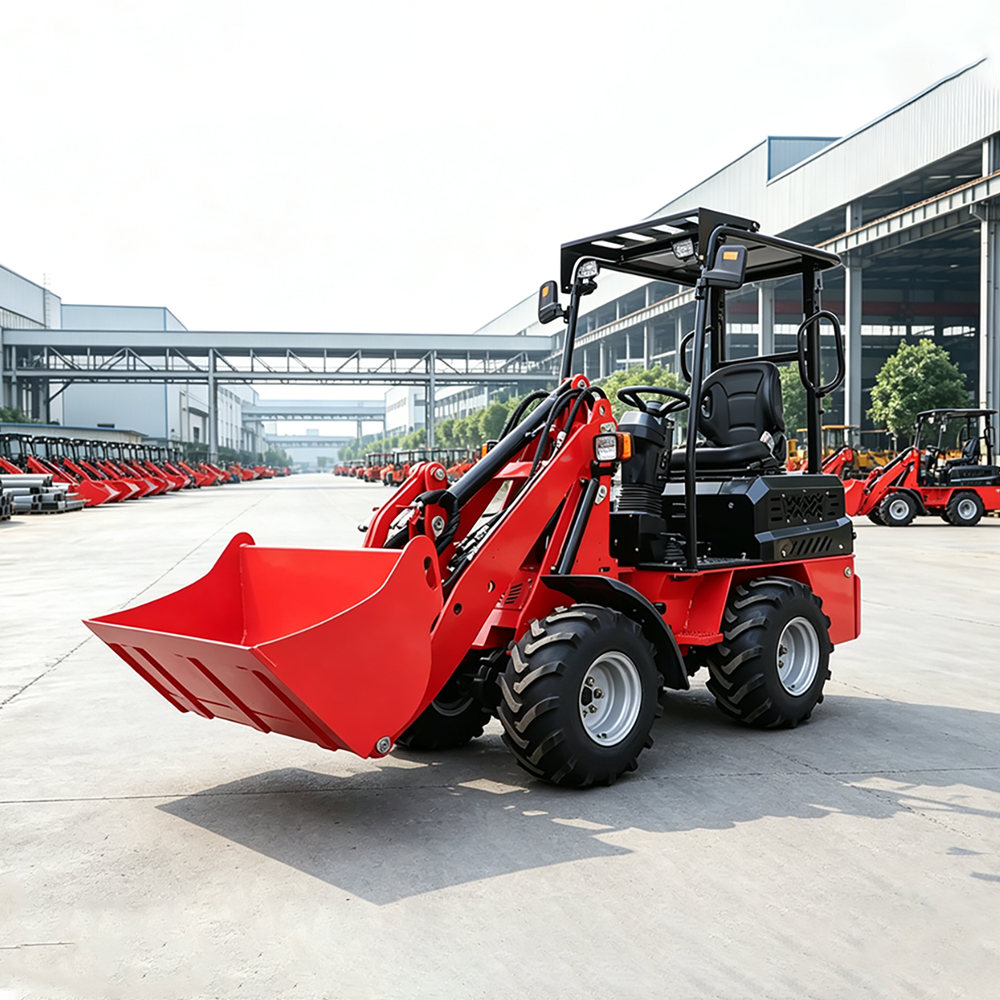
Radial lift machines are lower cost and excel at low-height digging and grading; the bucket swings in an arc that gives good mid-height reach but less reach at full height.
Vertical lift machines use additional linkage to keep the bucket nearly vertical as it rises — better reach for loading trucks and hoppers, more constant stability, and larger bucket capacities. They now make up a significant share of new sales (Wikipedia — Skid-steer loader).
Choose based on your buyers' typical work: radial for trenching and grading, vertical for truck loading and material handling.
4. Wheeled skid steer or compact track loader?
A skid steer equipped with tracks is called a compact track loader (CTL). Tracks spread the machine's weight, improving flotation on soft ground and reducing site damage — but they cost more and wear faster on hard surfaces. If your market is mostly hard-standing construction sites, wheels are the practical choice; for muddy, landscaped, or agricultural work, tracks win.
5. MOQ, pricing, and lead time
Factory-direct pricing only works at the right volume. Ask for the minimum order quantity, whether mixed containers (skid steer loader + attachments + spare parts) are allowed, and payment terms (T/T, L/C, or others). Get a written quotation that includes packaging and loading costs, and ask for the current production slot — real factories quote realistic lead times of several weeks because machines are built, tested, and packed to order.
6. After-sales: parts, warranty, and safety support
The cheapest machine is expensive if you cannot get parts. Evaluate:
Parts availability — filters, seals, pins, and hydraulic components stocked for fast dispatch
Warranty terms — what is covered and who handles claims
Technical support — manuals, videos, and remote troubleshooting
Safety documentation — every machine should come with operator manuals covering ROPS (rollover protection structure) and FOPS (falling-object protection) — the "zone of protection" that keeps operators safe (Wikipedia — Skid-steer loader)
Skid steers are hazardous when safety practices are ignored, and regulatory bodies publish dedicated guidance — the U.S. CDC/NIOSH has issued repeated alerts on skid steer fatalities (NIOSH Alert). A manufacturer that treats safety documentation as a compliance checkbox, not a priority, is a red flag.