
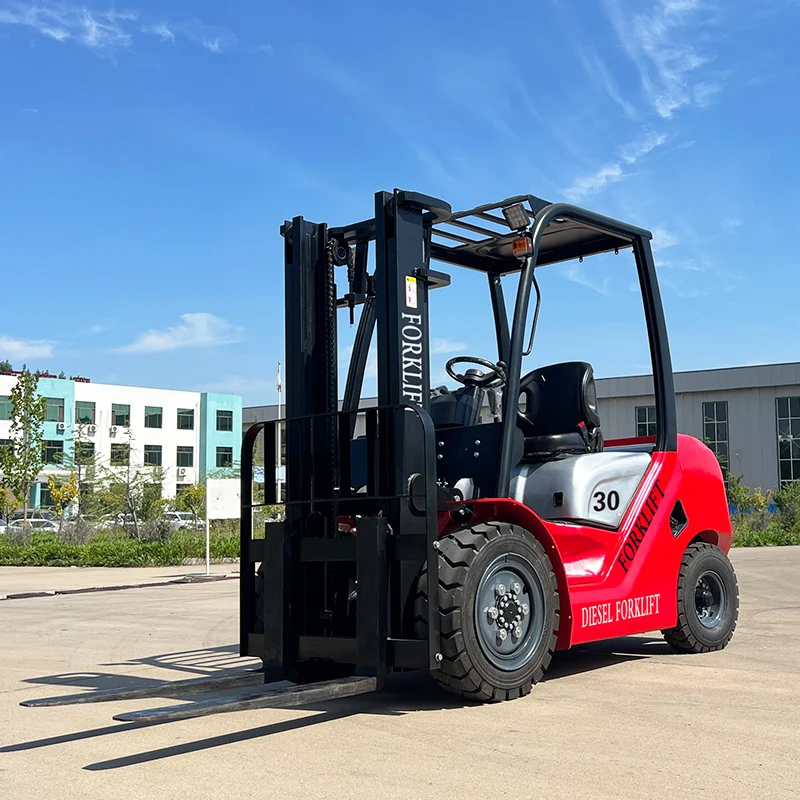
Buying a forklift isn't just about picking a random number off a specification sheet that matches your heaviest pallet. If you under-spec your machine, you risk dangerous tip-overs, dropped loads, and snapped mast channels. Over-spec it, and you end up burning valuable capital on a massive unit that can't even turn inside your warehouse aisles. To get the right balance between real-world safety and daily productivity, warehouse managers need to look beyond static weight numbers and understand how geometry, lift heights, and attachments change what a forklift can actually handle on the floor.
Rated capacity vs. real-world lifting limits
Every factory data plate lists a nominal load capacity, but that figure comes with a huge catch: it only applies under pristine test conditions. Standard ratings assume a balanced load sitting at a standard 24-inch (600 mm) load center distance—which is essentially the distance from the vertical face of the forks to the center of gravity of the load. The moment your crew picks up an oversized crate, a long piece of industrial pipe, or an awkward double-deep pallet, that center of gravity shifts forward. As that distance expands, your fork truck acts like a giant seesaw over the front drive axle. A 5,000-pound rated machine carrying an elongated crate might suddenly tip forward under just 3,200 pounds of actual weight because the leverage has changed.
Why mast elevation cuts into your lifting power
Lifting cargo up toward high-bay pallet racks fundamentally changes machine dynamics. As the telescoping steel mast extends upward, the vehicle's center of gravity climbs right along with it, creating dynamic sway and leverage issues. This physics phenomenon forces manufacturers to apply a "capacity derating curve." A heavy-duty material handling equipment asset designed to pick up 4,000 pounds at ground level might only be certified to lift 2,500 pounds when elevated to a 180-inch working height. Before finalizing your equipment order, always measure your highest racking beam and cross-reference it against the manufacturer's derating chart to make sure your crew maintains a safe structural safety margin.
The hidden weight penalty of hydraulic attachments
Adding specialized hydraulic tools—like side-shifters, paper roll clamps, or rotating bale clamps—makes your fleet versatile, but it also strips away net lifting capacity. Attachments add two distinct problems to the mechanical equation: dead weight and forward load offset. First, the heavy steel clamp itself hangs directly off the carriage, eating up available capacity. Second, the attachment pushes the actual pallet a few inches further away from the front axle, creating what engineers call the "lost load" effect. If you bolt a 400-pound side-shifter onto a standard truck, you might lose 600 pounds or more of actual lifting rating. Factoring in these mechanical deductions ahead of time prevents unexpected engine strain and system overload.
How yard terrain and ramp inclines affect stability
Where your machines work dictates how much margin of error you need in your capacity calculations. Inside a smooth, level concrete distribution center, cushion tires keep the truck steady and predictable. But step outside onto uneven gravel, cracked asphalt, or steep loading dock ramps, and everything changes. Bumping over potholes or taking an incline with a raised load introduces sudden dynamic shock forces to the mast. These sudden jolts temporarily multiply the effective weight of your cargo. If your daily operations involve rough outdoor surfaces, opting for a pneumatic-tire truck with a higher capacity safety factor ensures your operators stay planted firmly on the ground when carrying maximum payloads.
Building a safer, more efficient fleet with Infront engineering
Determining the right lifting capability comes down to pairing your jobsite geometry with rugged, well-engineered machinery. Infront builds commercial-grade material handling assets designed to take on tough industrial cycles without sacrificing stability. Built with reinforced high-tensile steel mast channels, heavy-duty drive axles, and intelligent anti-tipping chassis layouts, every Infront forklift keeps its balance when working at maximum elevation. By pairing efficient hydraulic pumps with user-friendly ergonomic controls and tough powertrains, Infront helps fleet owners cut downtime, avoid costly maintenance overhead, and keep everyday warehouse logistics moving safely.