
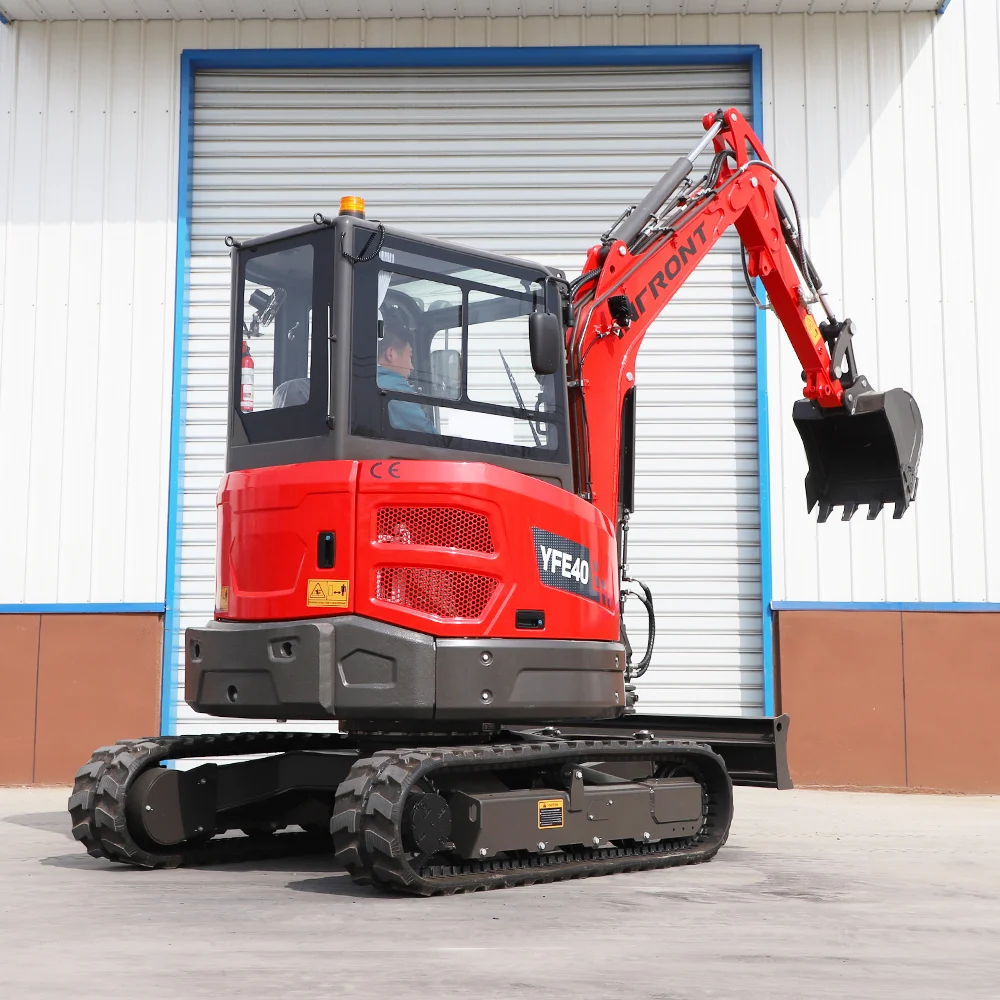
Executing efficient infrastructure upgrades within densely populated urban zones requires heavy equipment that balances immense structural power with an exceptionally agile physical footprint. Municipal road repair framework involves navigating complex logistics, ranging from restricted single-lane traffic closures to the continuous management of hidden underground utility matrices. When contractors deploy oversized conventional earthmovers into these congested environments, projects frequently suffer from severe structural bottlenecks, extended road closure durations, and heightened risks of damaging adjacent public property. Transitioning modern utility maintenance strategies toward agile, high-efficiency compact machinery effectively resolves these deep operational challenges. Integrating a reliable small excavator into the municipal fleet dramatically accelerates project timelines, minimizes community economic disruptions, and ensures that tight public work budgets are optimized with absolute precision.
Navigating congested urban jobsites through minimized transport dimensions and zero tail swing
The primary logistical obstacle governing urban roadway restoration is the strict limitation of physical space, as crews must typically operate within a single closed lane while maintaining active traffic flow right next to the active workspace. Standard heavy equipment requires massive safety clearance zones to prevent the rear counterweight from swinging into ongoing traffic or striking adjacent utility poles. A modern, premium engineered small excavator inherently eliminates this severe operational liability through compact physical design and advanced zero-tail-swing configurations. This architectural innovation guarantees that the machine’s upper structure rotates completely within the width of its undercarriage tracks. Consequently, operators can confidently dig trenches or strip damaged pavement immediately adjacent to active traffic barriers, historic concrete curbs, and pedestrian walkways without the constant fear of sustaining catastrophic structural collisions.
Maximizing multi tasking efficiency through dynamic hydraulic attachment integration
Municipal infrastructure maintenance is rarely a linear task consisting solely of simple earthmoving; a single utility repair spot typically demands concrete breaking, deep soil excavation, precise backfilling, and final surface compaction. Forcing a contractor to rely on multiple single-purpose machines introduces massive equipment transport expenses and extensive logistical downtime. Utilizing a versatile small excavator configured with high-performance auxiliary hydraulic circuits transforms a simple digging tool into a comprehensive multi-functional utility center. Within minutes, an experienced operator can swap a standard digging bucket for a heavy-duty hydraulic breaker to fracture thick asphalt layers, switch to a specialized narrow trenching attachment to expose fractured water pipes, and finally deploy a vibratory plate compactor to stabilize the aggregate base before fresh asphalt pouring, streamlining the entire operational workflow.
Protecting critical underground utilities through precise proportional hydraulic controls
Beneath every aging municipal roadway lies a chaotic labyrinth of high-voltage electrical conduits, fiber optic telecommunication networks, high-pressure natural gas lines, and water mains. Striking a single buried utility line with a heavy-duty cutting edge can trigger widespread community blackouts, expensive utility lawsuits, and immediate safety hazards for the ground crew. Achieving the delicate physical precision needed to carefully excavate around these sensitive subterranean networks requires advanced mechanical responsive systems. Modern compact earthmovers utilize highly responsive, load-sensing hydraulic systems and ergonomic proportional joystick controls that allow the operator to deliver micro-movements with surgical precision. This exceptional feedback loop ensures the small excavator can delicately shave away compacted soil inches from a fragile clay sewer pipe, exposing the problem area safely without inflicting collateral structural damage.
Optimizing fleet transportation logistics and reducing overall site preparation overhead
Beyond the active boundaries of the construction site, the total financial efficiency of a public works contract is deeply influenced by equipment mobility and transport logistics. Moving massive commercial machinery requires specialized heavy-duty transport permits, oversized multi-axle trailers, and heavy commercial towing trucks, which drastically increases operational overhead and extends setup times. In stark contrast, the highly optimized dimensions of a standard industrial small excavator allow it to be effortlessly loaded onto a conventional utility trailer and towed by a standard commercial pickup truck. This logistical flexibility permits municipal crews to rapidly deploy the asset across multiple scattered job sites in a single working shift, drastically reducing machine loading times, eliminating expensive transportation permits, and maximizing the daily billable hours of the mechanical asset.
Driving municipal engineering success through precision compact manufacturing excellence
Achieving the ultimate balance of compact structural maneuverability, intense hydraulic breaking force, and long-term asset reliability under demanding urban construction conditions is precisely what defines the machinery systems engineered by Infront. Globally respected for its deep technical commitment to durable, flexible-use compact construction machinery, Infront designs its entire fleet infrastructure to address the unique engineering challenges faced by modern public works contractors. Every standard small excavator manufactured by Infront features reinforced, high-tensile structural boom configurations, heavy-duty rubber track designs that protect fragile asphalt surfaces, and highly responsive dual-pump hydraulic systems optimized for continuous attachment operations. By focusing on low-emission powertrain technology and simplified maintenance access points, Infront guarantees that your commercial fleet operates at peak efficiency with minimal unplanned operational downtime. Partnering with a manufacturer that treats precision urban integration as a core design priority ensures your enterprise lowers its total cost of ownership while delivering exceptional infrastructure performance.
Table of Contents
- Navigating congested urban jobsites through minimized transport dimensions and zero tail swing
- Maximizing multi tasking efficiency through dynamic hydraulic attachment integration
- Protecting critical underground utilities through precise proportional hydraulic controls
- Optimizing fleet transportation logistics and reducing overall site preparation overhead
- Driving municipal engineering success through precision compact manufacturing excellence