
Maintaining the pristine aesthetic appeal of a premium golf course requires meticulous turf management across highly diverse topographical features. While manicuring flat fairways and level putting greens is a straightforward operational task, managing the extreme inclines, severe bunkers, and steep embankments presents a profound logistical and safety challenge. Standard cutting machinery often struggles on severe inclines, frequently suffering from catastrophic traction loss, engine oil starvation, and dangerous chassis tipping hazards. For turf management directors, greenskeepers, and commercial landscaping distributors, selecting an asset capable of conquering these hazardous vertical landscapes without damaging the sensitive turf is paramount. Determining exactly which lawn mower is best suited for steep slope golf courses involves analyzing the delicate interplay between mechanical center of gravity, specialized undercarriage traction engineering, and high-torque powertrain dynamics.
Analyzing the hazards of center of gravity and the engineering necessity of a low profile chassis
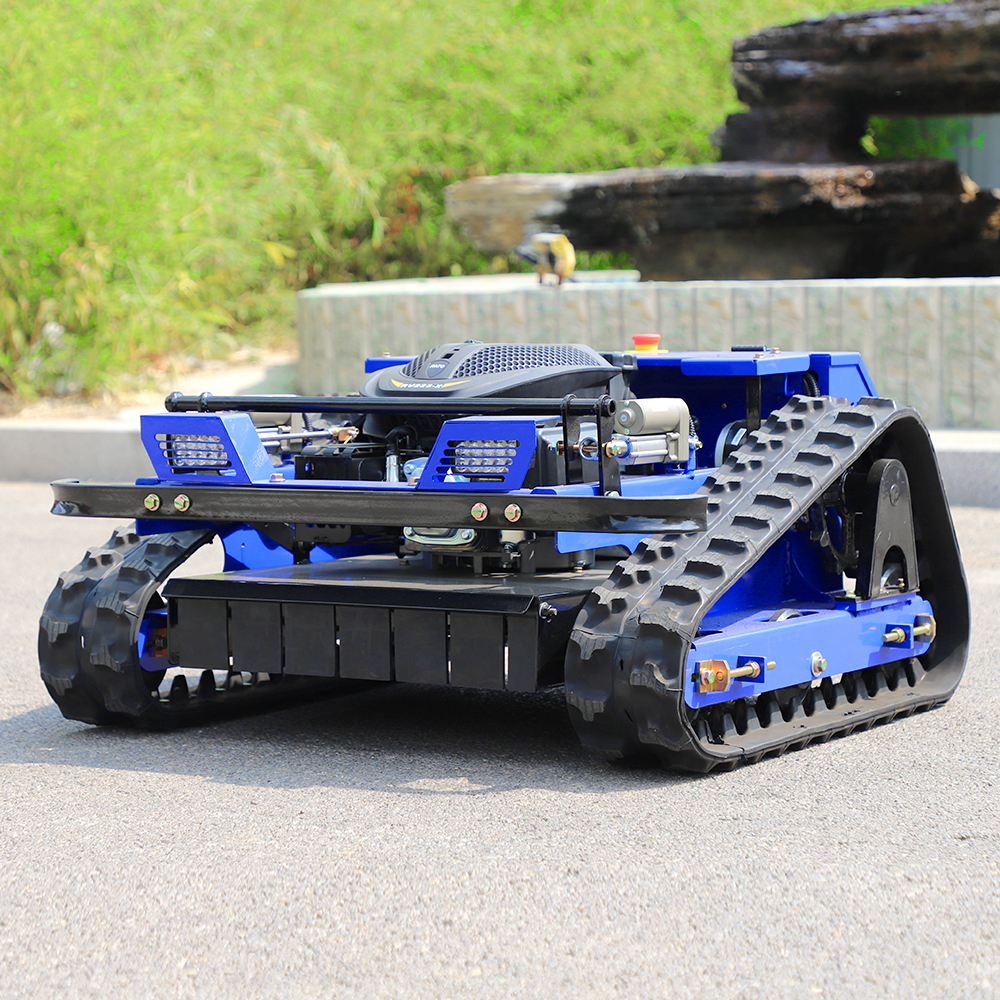
The absolute primary consideration when operating cutting equipment on a severe vertical incline is the constant threat of a rollover accident, which risks severe operator injury and massive equipment damage. Conventional ride-on commercial machines position the operator, fuel tank, and heavy internal combustion engine high above the axle line, inherently elevating the machine's center of mass. When this type of machine attempts to traverse a thirty-degree slope, the gravitational vector easily shifts outside the wheel footprint, causing the chassis to roll. To eliminate this operational hazard on premium golf courses, industrial designers prioritize an ultra-low-profile structural architecture. Engineering a low-clearance chassis that concentrates the heaviest mechanical components—such as the engine blocks and main hydraulic pumps—mere inches from the ground level ensures the lawn mower maintains absolute stability, keeping the machine firmly anchored to the hillside even during sharp directional changes.
Evaluating track undercarriages versus traditional tires for superior traction on delicate turf
Traction is the defining mechanical factor that separates a highly efficient hillside machine from a dangerous operational liability. Traditional air-filled rubber tires possess a limited surface contact area, which often results in wheel slippage when scaling damp grass slopes or loose earthen bunkers. This continuous slipping not only stalls productivity but also tears the delicate turf roots, leaving unsightly brown patches that ruin the golf course playability. Transitioning to a heavy-duty rubber track system solves this critical challenge by expanding the machine's physical footprint across a massive surface area. This expanded contact zone distributes the machine's operating weight evenly, resulting in exceptionally low ground pressure that prevents soil compaction. Premium rubber tracks with aggressive multi-directional tread patterns bite into the steep slope, providing unwavering lateral stability that allows the lawn mower to maintain a perfectly straight cutting trajectory across damp or hyper-elevated terrains without drifting downward.
Deciphering engine oiling systems and high torque requirements for continuous incline operations
A hidden mechanical failure mechanism that frequently plagues standard machinery during extended slope work is engine oil starvation. Standard four-stroke internal combustion engines rely on gravity to pool lubricating oil in the bottom pan, where the oil pump distributes it to critical moving parts. When a standard lawn mower operates at a steep angle for a prolonged period, the engine oil shifts entirely to one side of the crankcase, leaving the oil pickup tube dry and causing immediate, catastrophic internal engine seizure. Overcoming this engineering obstacle requires a specialized industrial engine configured with a pressurized dry-sump lubrication system or a dual-pickup oil pump designed specifically for continuous angular operations. Furthermore, scaling steep inclines while driving high-velocity cutting blades requires massive, sustained hydraulic or mechanical torque, ensuring that the cutting deck maintains a uniform blade speed to prevent tearing the grass blades when encountering dense, overgrown roughs.
Implementing remote control operations to achieve maximum safety and precise turf management
Modern technological innovations have introduced a revolutionary paradigm shift in commercial turf maintenance through the integration of digital remote-control systems. Traditional slope mowing required operators to sit atop the tilting machine, enduring immense physical strain and constant exposure to roll-over hazards. By replacing the traditional steering wheel with a long-range, industrial-grade radio frequency remote control, operators can command the lawn mower from a completely safe, level vantage point up to several hundred meters away. This operational configuration eliminates human risk entirely from the hazardous incline zones. From this detached perspective, the operator enjoys an unobstructed, complete view of the terrain, enabling them to navigate complex contours, avoid hidden irrigation heads, and sculpt clean, uniform patterns across the golf course roughs with exceptional digital precision.
Driving commercial turf efficiency through premium low impact industrial manufacturing
Achieving the ultimate synchronization of low-gravity architectural stability, maximum climbing traction, and exceptional operational safety under extreme high-slope conditions is precisely what defines the specialized equipment engineered by Infront. Globally respected for its deep commitment to flexible engineering and high-performance compact machinery, Infront has optimized its specialized cutting platforms to solve the toughest turf maintenance challenges faced by international golf course managers and commercial contractors. Every commercial lawn mower manufactured by Infront features reinforced low-profile chassis, high-adhesion rubber track configurations, and highly responsive remote control integration that maximizes onsite productivity. By utilizing advanced wear-resistant deck materials and precision-balanced multi-blade cutting systems, Infront ensures that your investment delivers immaculate turf presentation and prolonged component service life. Partnering with a heavy equipment manufacturer that treats technical slope integration as a core design priority guarantees that your fleet continuously avoids the costly disruptions of unplanned downtime, delivering an unmatched return on investment across every complex landscape.
Table of Contents
- Analyzing the hazards of center of gravity and the engineering necessity of a low profile chassis
- Evaluating track undercarriages versus traditional tires for superior traction on delicate turf
- Deciphering engine oiling systems and high torque requirements for continuous incline operations
- Implementing remote control operations to achieve maximum safety and precise turf management
- Driving commercial turf efficiency through premium low impact industrial manufacturing