
Why Tight Job Sites Demand Smarter Material Handling
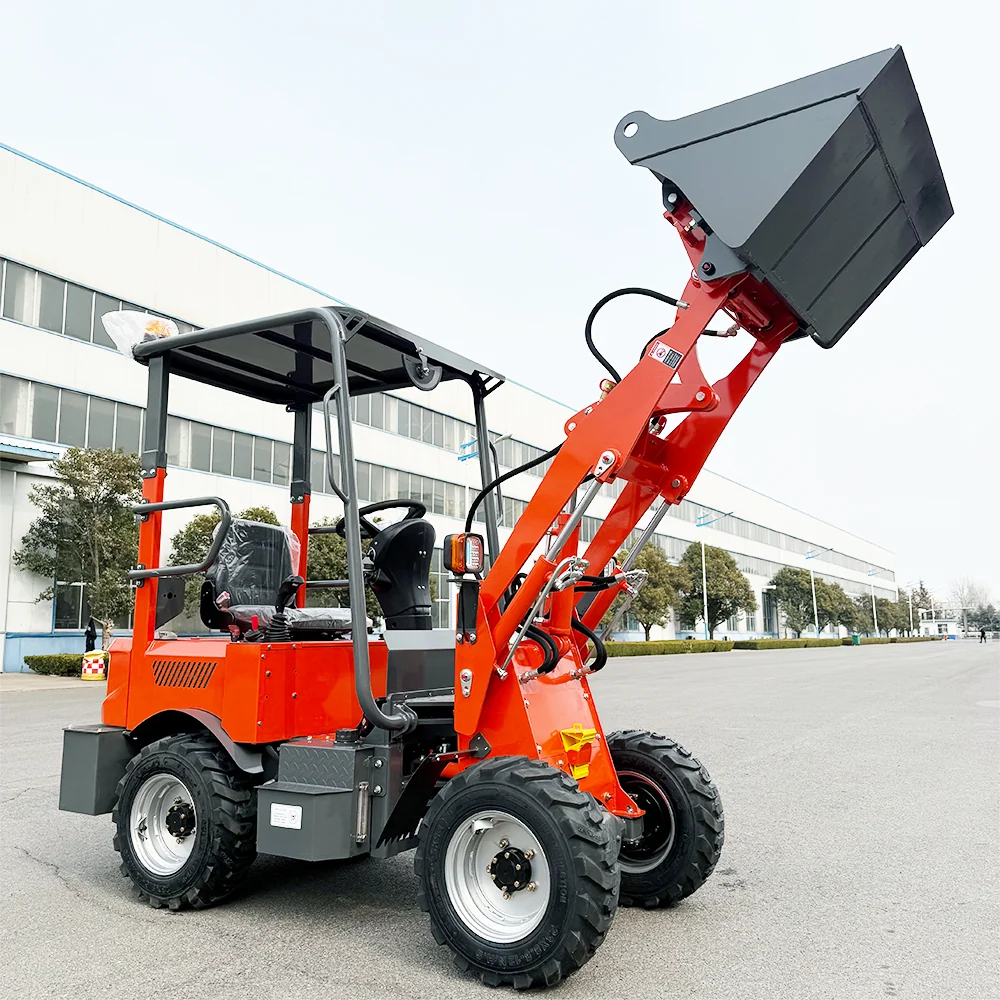
Anyone who has ever managed an urban streetscape retrofit, a crowded brickyard, or a backyard hardscaping job knows the frustration of having the wrong iron on site. Big earthmovers look great on open highway projects, yet they become dead weight the second a crew has to squeeze through a narrow gate or work over freshly laid pavers. On the flip side, relying on four laborers pushing wheelbarrows all afternoon burns through payroll and drags out project timelines. That exact operational gap is where a purpose-built compact wheel loader earns its keep every single day. Across daily utility and municipal jobs, roughly two-thirds of pallet and aggregate moves weigh well under a metric ton. Bringing in a nimble wheel loader bridges the gap between brute hydraulic lifting power and delicate footprint control, letting crews move gravel, pavers, and pipe bundles fast without tearing up finished turf.
Chassis Geometry That Beats Narrow Alleyways
Shrinking a machine down on paper is easy, but keeping it stable with a full bucket raised high takes serious chassis engineering. When a wheel loader weaves between scaffolding frames, warehouse racking, or residential fences, raw dimensions dictate whether the job gets done or stalls out. Take a close look at proven production specs like the YFL06 platform: a 1380mm wheelbase matched with a 945mm wheel tread hits a sweet spot between tight turning agility and lateral balance. Instead of skidding and chewing up asphalt during sharp turns, that geometry lets the wheel loader pivot cleanly while keeping all four corners planted. Underneath the frame, a full 200mm minimum ground clearance keeps hoses and axles safe when climbing over broken concrete curbs or deep mud ruts. Paired with true four-wheel drive and wide, aggressive lug tires, a rugged mini wheel loader pulls steadily through wet clay where warehouse forklifts instantly spin out.
Dual Motor Powertrains and Clean Battery Muscle
Spend ten minutes inside an enclosed distribution shed or a basement renovation zone, and the downside of traditional diesel power becomes painfully obvious. Noise echoes off every wall, and exhaust fumes force crews to set up costly ventilation fans. Modern powertrain engineering solves both headaches by turning the electric wheel loader into a legitimate heavy hitter rather than a light-duty compromise. Rather than running everything off a single overworked pump, high-output designs like the YFL06 rely on a dedicated dual-motor layout—one motor drives the wheels while a separate motor powers the hydraulic boom. Pushing into a packed pile of wet sand never starves the lift arms of speed. Backed by twelve units of 3-EVF-200 maintenance-free lead-acid gel batteries packing 14.4 kW of energy storage, this compact wheel loader muscle-lifts a 650 kg rated load shift after shift without a drop of fuel or a puff of smoke.
Hydraulic Precision and Fast Attachment Swaps
A machine that only scoops loose dirt spends half the week parked in the yard, which is why seasoned fleet buyers obsess over auxiliary hydraulics and coupler design. When a wheel loader carries a universal quick-hitch plate and responsive valve banks, the front boom transforms into an all-day tool carrier. Across versatile lineups stretching from nimble YFE04 electric units up to long-reach YFT1500 telescopic models, one operator can drop a standard dirt bucket and lock onto pallet forks, lifting hooks, log grapples, or an aerial maintenance basket in minutes. Smooth hydraulic feathering matters just as much as raw breakout force. When setting fragile stone slabs or hoisting equipment onto a flatbed truck, precise joystick metering lets the wheel loader inch loads into place without jerky drops or spilled material.
Cabin Sightlines and Real World Safety Standards
Specs on a brochure never tell the whole story until an operator sits in the seat for a full eight-hour shift. Fatigue creeps in fast when a cab vibrates excessively, levers sit at awkward angles, or thick steel pillars block the view of the front tires. International safety benchmarks—specifically ISO 3471 for Roll-Over Protective Structures and ISO 3449 for Falling-Object Protective Structures—exist because tight work zones leave zero room for blind-spot mistakes. A well-thought-out wheel loader gives the driver a commanding view right down to the bucket cutting edge and quick-coupler pins, cutting out guesswork when hooking up tools near ground workers. Meeting strict European CE compliance also means emergency brake circuits, insulated wiring harnesses, and load-holding valves are built to pass tough customs inspections and job site audits from Rotterdam to Sydney.
Five Year Ownership Costs and Fleet Payback
Smart contractors rarely get fooled by a rock-bottom sticker price if the machine eats up thousands of dollars in shop labor every six months. Calculating the real return on a wheel loader means looking at five-year operating math: fuel burn, filter kits, mechanic hours, and unscheduled downtime. Switching to a sealed, maintenance-free gel battery architecture wipes out a massive checklist of routine chores—no engine oil changes, no clogged diesel particulate filters, no glow plug failures on freezing mornings, and zero coolant leaks. Because electric drivetrains use far fewer moving wear parts than internal combustion engines, spare-part bills drop sharply while fleet availability stays high during peak summer contracts. Factor in the ability to replace three specialized rental machines with one multi-attachment wheel loader, and the payback window shrinks by months.
Proven Factory Craftsmanship and Parts Availability
Even the smartest engineering design falls flat if welds crack under stress or replacement seals take six weeks to ship across the ocean. Choosing a dependable front end wheel loader ultimately comes down to the manufacturing discipline and supply chain muscle standing behind the badge. Infront has built lasting trust among global equipment dealers and contractors by keeping R&D, heavy steel fabrication, robotic welding, and full-load hydraulic testing under strict internal quality control. Whether a crew needs the ultra-compact YFE04, the 650 kg capacity YFL06, or the high-reach YFT1500 telescopic series, Infront backs every shipment with tailored regional configurations and fast-moving spare parts support so machines stay working in the dirt instead of waiting in a repair bay.
Common Questions From Equipment Buyers and Operators
Can a 650 kg rated electric wheel loader really handle heavy landscaping materials?
Absolutely. A 650 kg rated load on a sturdy chassis like the YFL06 wheel loader easily handles full scoops of wet gravel, topsoil, interlocking paver bundles, and bagged cement without straining the boom or tipping forward on level ground.
How does a four wheel drive compact wheel loader perform on wet mud and loose gravel?
Thanks to a balanced 1380mm wheelbase, 945mm tread width, 200mm ground clearance, and wide lugged tires, a four-wheel drive wheel loader distributes weight evenly and bites into muddy or gravel surfaces where standard warehouse forklifts get stuck.
What attachments can crews run on a multi purpose compact wheel loader?
Using a quick-change coupler and auxiliary hydraulic lines, operators can outfit a wheel loader with standard buckets, pallet forks, lifting crane hooks, bale or timber clamps, and aerial work platforms in just a couple of minutes.
Do maintenance free gel batteries on an electric wheel loader require water refills?
No. The twelve 3-EVF-200 lead-acid gel batteries delivering 14.4 kW of power are fully sealed and maintenance-free, meaning crews never have to top up distilled water or clean up acid spills—just plug in the charger between shifts and grease the chassis pins.
Why do international dealers look for CE and ISO compliance when importing a wheel loader?
Verified CE certification alongside ISO 3471 and ISO 3449 structural protection standards proves that the wheel loader built by Infront meets legal safety, braking, and electrical mandates required for smooth customs clearance and commercial insurance coverage worldwide.
Table of Contents
- Why Tight Job Sites Demand Smarter Material Handling
- Chassis Geometry That Beats Narrow Alleyways
- Dual Motor Powertrains and Clean Battery Muscle
- Hydraulic Precision and Fast Attachment Swaps
- Cabin Sightlines and Real World Safety Standards
- Five Year Ownership Costs and Fleet Payback
- Proven Factory Craftsmanship and Parts Availability
-
Common Questions From Equipment Buyers and Operators
- Can a 650 kg rated electric wheel loader really handle heavy landscaping materials?
- How does a four wheel drive compact wheel loader perform on wet mud and loose gravel?
- What attachments can crews run on a multi purpose compact wheel loader?
- Do maintenance free gel batteries on an electric wheel loader require water refills?
- Why do international dealers look for CE and ISO compliance when importing a wheel loader?