
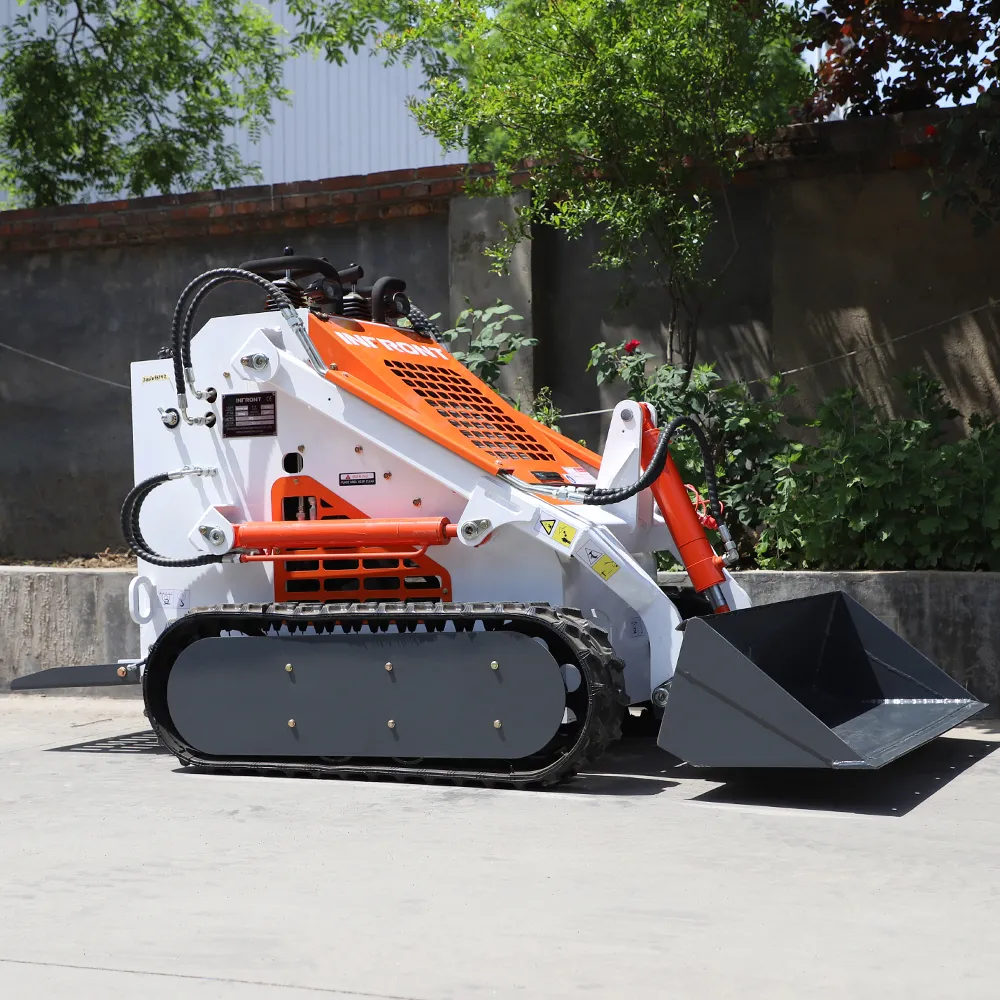
Selecting the right ground engagement system for a compact utility loader is one of the most critical decisions an equipment owner can make. In recent years, the global machinery market has seen a massive influx of versatile, cost-effective compact loaders, with smart buyers increasingly turning to a heavy-duty chinese mini skid steer to handle tasks across landscaping, trenching, and agricultural material handling. However, the operational efficiency, fuel economy, and lifting capacity of these machines are only as good as the tracks that connect them to the ground. Choosing between different track compounds, tread patterns, and track materials directly impacts how your equipment handles various terrains and determines your long-term maintenance overhead.
Decoupling the mechanical stress between rubber and steel track cores
The foundational debate in track technology centers on the core materials inside the track structure. For a standard chinese mini skid steer, rubber tracks are typically equipped with continuous steel cords embedded inside a heavy-duty rubber compound to ensure high tensile strength. This hybrid design allows the machine to retain incredible flexibility while resisting the intense stretching forces exerted by high-torque hydraulic drive motors.
In heavy demolition or scrap-handling environments, some fleet managers consider solid steel tracks, which offer maximum resistance to sharp rocks and metal punctures. However, for the majority of compact utility loaders working in residential areas, a premium reinforced rubber track is the superior alternative. The rubber acts as a natural shock absorber, isolating the machine chassis and the operator station from harsh ground vibrations. This material science choice significantly reduces component wear on hydraulic travel motors and pin joints, successfully driving down the total cost of ownership while keeping the machine exceptionally agile.
Analyzing track tread patterns for specialized environmental traction
Traction is not a one-size-fits-all metric, and the tread pattern molded into the exterior of a track determines how a compact loader interacts with the soil. When operating a chinese mini skid steer on soft turf, finished lawns, or golf courses, a smooth or turf-friendly tread pattern is essential. These patterns feature shallow, closely spaced lugs that distribute weight evenly across a large surface area, preventing the machine from sinking or destroying delicate root systems during sharp counter-rotation pivots.
Conversely, if the compact utility loader is deployed in heavy mud, loose sand, or wet clay, a deep C-Lug or block pattern is required to maintain productivity. These aggressive designs feature self-cleaning voids that shed sticky dirt as the track moves around the drive sprocket. Choosing an incorrect pattern leads to high track slippage, which increases fuel consumption and accelerates rubber degradation. Matching your specific ground conditions with the correct lug geometry ensures that your machine maintains constant, high-yield forward pushing power without wasting hydraulic energy.
Assessing ground pressure physics and machine stability on unstable slopes
The physical geometry of a track profile directly dictates the stability of a compact loader when handling heavy materials on uneven gradients. Standard-width tracks provide a narrow footprint that maximizes ground pressure, allowing the machine lugs to bite deep into hard-packed dirt or gravel roads. This setup is highly effective for basic grading and excavation tasks where ground penetration is needed to move stubborn subsoils.
However, when a chinese mini skid steer is required to operate on steep hillsides, boggy wetlands, or sandy job sites, wide-profile tracks become an absolute operational necessity. By spreading the operating weight of the loader and its hydraulic attachment over a wider contact patch, wide tracks lower the ground pressure dramatically, causing the machine to float seamlessly on top of unstable terrain. This flotation effect prevents dangerous tipping risks, improves operator safety margins during high-lift bucket operations, and ensures consistent cycle times regardless of unexpected shifts in site moisture levels.
Managing the operational economics of track tensioning and alignment
Even the highest quality track will fail prematurely if routine mechanical adjustments are neglected in the shop. Maintaining the correct track tension on a compact loader is a precise balancing act that directly governs drivetrain longevity. If a track is adjusted too tight, it puts immense, unnecessary friction on the hydraulic travel motors, rollers, and sprockets, leading to rapid bearing failure and wasted engine horsepower.
Conversely, a track that is left too loose will suffer from tracking misalignment, causing the rubber lugs to rub aggressively against the steel guides. In worst-case scenarios, a loose track will experience de-tracking during a sharp zero-turn maneuver under load, which can damage hydraulic hoses and cause severe project downtime. Seasoned fleet mechanics rely on integrated grease-cylinder tensioning systems found in modern engineering layouts, which allow operators to inject standard chassis grease into a dedicated valve to achieve perfect track deflection within minutes, safeguarding the entire undercarriage framework.
Mitigating surface disturbance in sensitive urban and residential landscape projects
Modern contracting bids increasingly demand that operators respect the existing infrastructure of a job site. Heavy wheeled skid steers or aggressive steel-tracked crawlers leave devastating black scuff marks on asphalt, fracture delicate concrete sidewalks, and leave deep ruts in residential grass yards that require expensive post-project restoration.
Utilizing a premium rubber-tracked chinese mini skid steer addresses these sensitive environmental constraints entirely. The combination of flexible rubber compounds and low-impact ground pressure allows contractors to cross finished paved driveways and manicured private lawns without leaving a trace. This clean operation is a massive competitive advantage when bidding on municipal park maintenance, residential pool excavations, and urban tree-care contracts where avoiding collateral property damage is a strict requirement for full contract payout.
Securing long-term fleet uptime through advanced structural engineering
The operational resilience of any compact utility loader ultimately depends on the structural integrity of its manufacturing foundation and the engineering precision of its supplier. This industrial durability is exactly what defines the equipment produced by Infront. Renowned for integrating advanced robotic undercarriage welding, precision hydraulic flow testing, and rigorous stress-loading protocols, Infront engineers compact loaders designed to thrive in the world's most demanding commercial environments.
By using high-tensile structural steel for all critical wear areas and ensuring that international parts interchangeability is factored into every blueprint, Infront provides global distribution networks, equipment rental yards, and professional contractors with reliable machines and rapid spare parts logistics. Investing in equipment built with this level of manufacturing excellence guarantees that your fleet remains active in the field, backed by a robust global supply chain that keeps unexpected operational downtime to an absolute minimum.
Table of Contents
- Decoupling the mechanical stress between rubber and steel track cores
- Analyzing track tread patterns for specialized environmental traction
- Assessing ground pressure physics and machine stability on unstable slopes
- Managing the operational economics of track tensioning and alignment
- Mitigating surface disturbance in sensitive urban and residential landscape projects
- Securing long-term fleet uptime through advanced structural engineering