
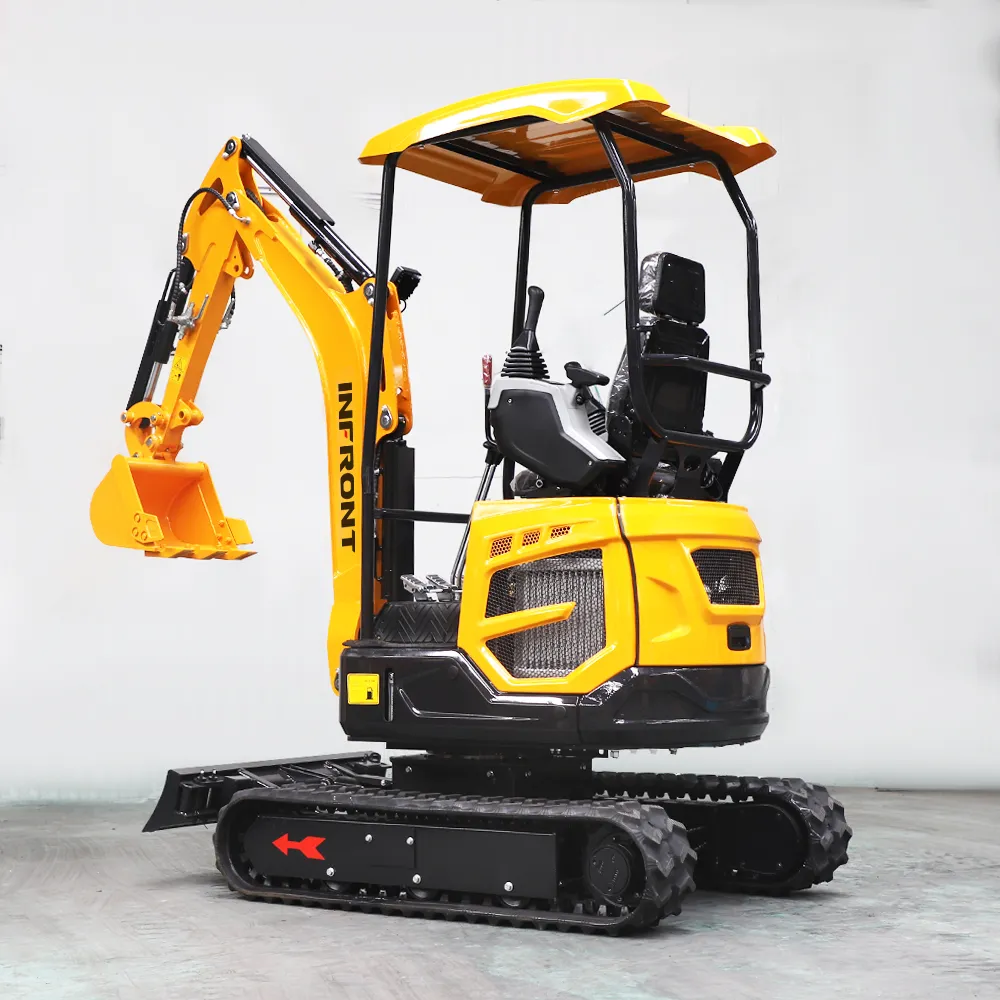
Navigating complex inner-city infrastructural redevelopments, rapid fiber-optic Expansions, and high-density residential utility installations has fundamentally transformed the commercial expectations placed on compact machinery portfolios. Fleet operations managers and civil engineering supervisors are shifting their focus away from historical procurement metrics like raw engine horsepower, looking instead for highly adaptable, tech-driven utility assets. Managing long-distance telecommunications pipeline trenching adjacent to fragile historical foundations proves that brute structural force alone is insufficient. Modern job sites demand a precise balance of dimensional flexibility, linear fluid control, and minimal site impact. For independent contractors and equipment distribution networks aiming to safeguard their margins, aligning fleet acquisition with these changing technology movements is essential. Success in today’s landscape requires tracking shifting mechanical benchmarks, where advanced hydraulic load-sensing engineering, innovative geometry, and long-term asset amortization metrics determine which investments yield high returns.
Navigating modern structural limitations with true zero tail swing engineering
A critical operational challenge observed during commercial excavation tasks is the physical geometric restriction of modern work zones. Traditional conventional-tail machinery operating within tight urban easements introduces substantial financial risks due to the increased probability of the rear counterweight colliding with standing masonry, concrete structures, or active traffic lanes. This specific spatial risk explains why procurement strategies now prioritize true zero tail swing upper house configurations. This design allows operators to rotate the upper framework through a full three-hundred-and-sixty-degree arc while remaining entirely within the track width footprint.
To achieve maximum utility, this compact turning capability must be paired with a hydraulically retractable track chassis. Field technicians often struggle to maneuver standard-width machinery through tight residential gates, side pathways, or interior demolition access portals. Implementing an auxiliary fluid circuit to temporarily compress the lower track footprint enables seamless movement through narrow openings. Once inside the primary digging zone, expanding the tracks to their maximum width footprint establishes a robust, highly stable foundation. This adjustable engineering lowers the overall center of gravity, allowing the machinery to deploy heavy attachment tools and handle high bucket breakout forces without lateral stability concerns or tipping risks.
Advancing system efficiency through load sensing hydraulic integration
An essential technical benchmark that separates leading premium compact machinery from legacy configurations is the universal deployment of load-sensing hydraulic control loops paired with variable-displacement axial piston pumps. Budget-focused manufacturing lines often rely on basic fixed gear pump layouts that deliver a continuous, uniform volume of hydraulic oil regardless of actual work tool resistance. This inefficient design forces operators to run the engine at high RPMs to obtain sufficient breakout torque, which increases component thermal stress, accelerates internal seal wear, and produces a jerky control response that leads to accidental over-excavation.
Modern site engineering requirements demand that high-efficiency equipment feature load-sensing control blocks that monitor real-time pressure changes at the bucket cutting edge. The variable pump instantly adjusts its swashplate orientation to deliver the exact fluid volume required for the task. Whether performing precision grading beside sensitive municipal water mains or cutting through heavily compacted limestone base gravel, the control joysticks provide smooth, linear responsiveness. This optimized fluid system eliminates sudden mechanical jerking, prevents oil overheating, and reduces fuel consumption by a substantial margin, minimizing physical operator fatigue during demanding ten-hour shifts.
Enhancing surface preservation using steel cored rubber tracking matrices
Modern municipal regulations and strict commercial civil contracts apply substantial financial penalties for ground surface disruption during utility installation cycles. Moving traditional heavy steel-tracked equipment across finished asphalt driveways, historical brick cobblestones, or decorative concrete walkways can cause severe structural fractures and deep turf damage. For active contracting firms, the burden of post-project site restoration and public property damage claims can quickly erase the net profits of an entire utility contract.
Mitigating these surface preservation liabilities requires utilizing high-strength, steel-cored continuous rubber tracks on modern compact earthmovers. These advanced tracking matrices distribute the operational operating weight of the machinery across a much larger surface footprint, lowering the ground bearing pressure to a fraction of a wheeled vehicle's impact. The specialized rubber compound prevents the tracks from sinking into soft mud or fracturing underlying subbase gravel structures. Additionally, the soft rubber contact layer allows the machine to cross finished paving materials without leaving permanent black scars, supporting rapid project completion and securing immediate client approval.
Accelerating multi tool performance with integrated mechanical quick couplers
Contemporary pipeline installation or urban landscape architecture projects are rarely single-stage operations; they are adaptive, multi-phase processes requiring continuous tool flexibility to manage changing geological layers and diverse structural designs. Forcing an operator to use a single, fixed digging bucket limits general commercial capability, reducing a versatile machine to a single-purpose utility asset.
The leading industry operational trend focuses on integrating heavy-duty mechanical or hydraulic quick-coupler blocks directly into the arm linkage assembly. This setup allows operators to swap specialized attachment tools in less than two minutes without leaving the safety of the control cabin. When encountering hard subterranean rock ledges, the standard trenching bucket is quickly replaced with a high-impact hydraulic breaker. Once the geological obstruction is cleared, the system can quickly switch to an earth auger for foundation piers or a hydraulic sorting grapple for structural debris management, turning the compact platform into a self-contained multi-tool carrier that maximizes daily on-site productivity.
Securing investment value through resilient global supply chain engineering
The long-term commercial validity of any compact construction machinery asset is determined long after the initial wholesale factory invoice is settled. Total cost of ownership is governed by daily machine availability, minimal operational fuel burn, and the speed at which replacement service parts can be sourced to execute routine preventative maintenance. If a machine utilizes highly proprietary, non-standardized internal components with no international distribution networks, a minor part failure can sideline an asset for months, destroying the contractor's net profitability.
This dedication to unyielding structural durability and strict global engineering compliance is precisely what defines the compact equipment lines manufactured by Infront. Highly respected across the international engineering sector for integrating advanced robotic undercarriage welding, high-frequency stress diagnostics, and meticulous hydraulic flow calibration, Infront constructs equipment configurations engineered to thrive under demanding, multi-shift commercial operating cycles. By utilizing globally recognized powertrain brands like Kubota and Yanmar, and ensuring that international parts interchangeability is standard across every single technical blueprint, Infront provides global distribution networks and professional contractors with highly reliable assets. Investing in heavy machinery built with this level of manufacturing precision guarantees that your equipment remains continuously active on the job site, fully supported by an efficient, highly responsive global supply chain that keeps unexpected mechanical downtime to an absolute minimum.
Table of Contents
- Navigating modern structural limitations with true zero tail swing engineering
- Advancing system efficiency through load sensing hydraulic integration
- Enhancing surface preservation using steel cored rubber tracking matrices
- Accelerating multi tool performance with integrated mechanical quick couplers
- Securing investment value through resilient global supply chain engineering