
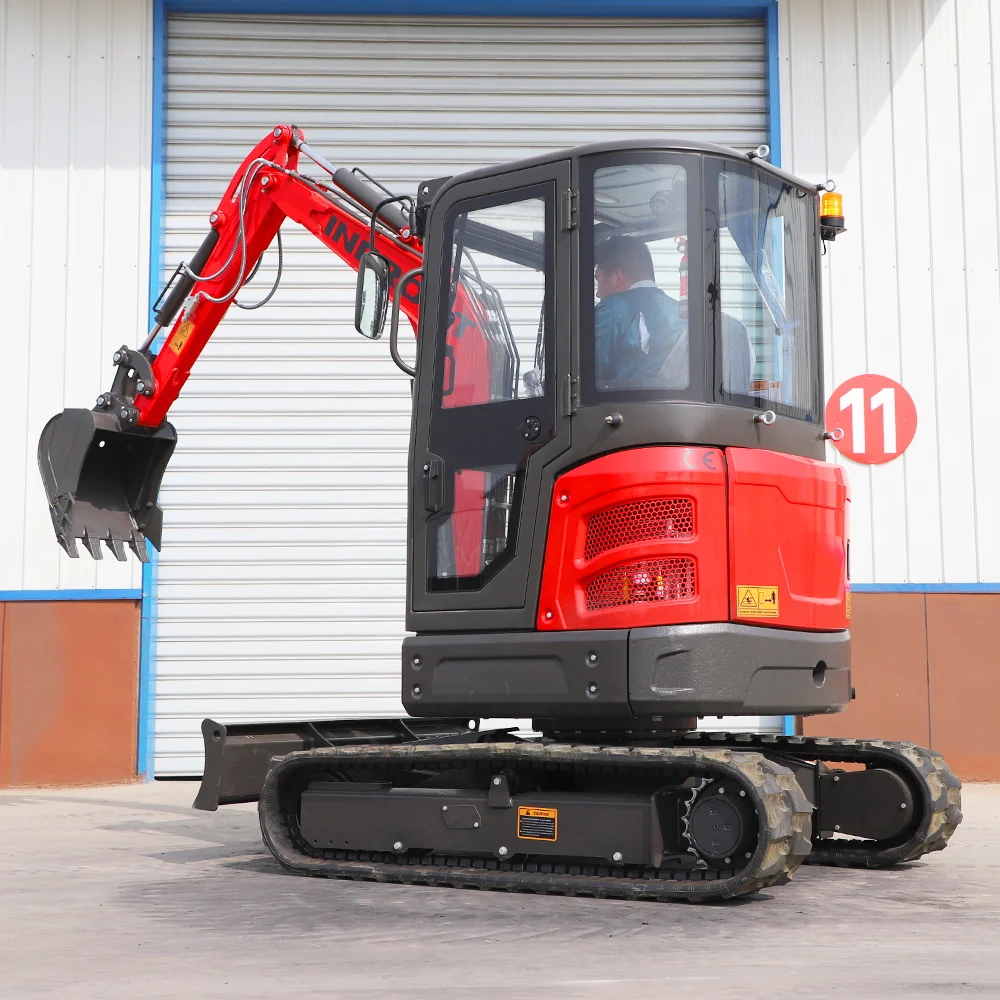
Modern agricultural management requires a delicate balance between powerful industrial mechanization and careful preservation of sensitive natural environments. For fruit growers, vineyard managers, and agricultural equipment distributors, upgrading from manual labor to automated trenching is essential for maintaining efficient irrigation, applying organic fertilizers, and installing subsurface drainage networks. However, selecting a random commercial digger without evaluating the specific spatial constraints of an active fruit plantation can lead to severe crop damage and financial losses. Investing in the right mini excavator for sale engineered specifically for the dense planting structures of a modern orchard ensures that high-velocity trenching operations can co-exist seamlessly with delicate tree root networks and low-hanging fruit canopies.
Analyzing spatial constraints and the necessity of zero tail swing designs
The primary obstacle encountered when operating heavy machinery inside an established fruit plantation is the lack of physical operating clearance between densely planted tree rows. Traditional earthmovers with wide, protruding rear counterweights present an immediate hazard, as the upper structure swings around and collides with fragile branches, fracturing productive wood and lowering seasonal crop yields. Therefore, a smart grower looking for a highly productive mini excavator for sale must prioritize a true zero-tail-swing (ZTS) configuration. A zero-tail-swing design ensures that the upper housing rotates entirely within the width of its undercarriage tracks, allowing operators to dig close-quarters utility trenches directly adjacent to supportive trellises and mature tree trunks without the constant fear of catastrophic structural collisions.
Evaluating chassis width flexibility and adjustable rubber track undercarriages
Orchard layout designs vary significantly based on the specific crop variety, ranging from wide citrus groves to highly compressed high-density apple orchards. A fixed-width track frame severely limits an asset's cross-functional utility, as a machine built for open fields cannot physically pass through narrow plantation gates or tight canopy rows. When browsing the international market for a versatile mini excavator for sale, savvy procurement managers look for units equipped with hydraulically retractable undercarriages. This engineering feature allows the operator to narrow the tracks down to less than a meter to safely navigate tight vineyard rows, and then expand the undercarriage once in position to re-establish a wide, stable footprint that prevents tipping while digging deep, heavy clay trenches. Furthermore, utilizing premium rubber tracks instead of steel grousers absorbs operational vibrations and distributes the machine's operating weight evenly, drastically reducing soil compaction that could otherwise choke vulnerable root zones.
Deciphering hydraulic oil flow rates for specialized continuous trenching attachments
The efficiency of a fruit farm trenching operation is not solely dependent on a standard digging bucket; it relies heavily on the continuous hydraulic performance of specialized attachments like auxiliary augers, rotary trenching wheels, or hydraulic organic fertilizer injectors. When evaluating an agricultural mini excavator for sale, a thorough inspection of the auxiliary hydraulic flow rate and pressure rating is paramount. A machine with insufficient hydraulic output will cause continuous attachments to stall out when encountering hardpan soils or thick underground root structures, overloading the primary diesel engine and causing fuel consumption metrics to spike. Opting for a machine that delivers consistent, high-pressure dual-directional hydraulic flow guarantees that continuous attachments run smoothly for hours, resulting in perfectly uniform trench walls that simplify the subsequent installation of drip irrigation lines.
Assessing operator cabin protection profiles and low profile engine configurations
Working beneath low-hanging agricultural canopies requires a machinery design that boasts a low vertical profile without sacrificing heavy-duty operator protection standards. A standard high-clearance commercial cabin will consistently snag on fruit-laden branches, damaging the crop and scratching the machine's upper framework. The ideal agricultural mini excavator for sale should feature either a low-profile canopy layout or a certified roll-over protective structure (ROPS) that can be easily folded down during low-clearance operations. This architectural consideration ensures the operator remains fully shielded from overhead hazards while permitting the machine to glide effortlessly beneath dense foliage, bringing mechanized precision directly to the base of the crop without disrupting the surrounding biological ecosystem.
Empowering modern agricultural efficiency through premium flexible engineering solutions
Achieving the ultimate synchronization of low-impact maneuverability, high-torque hydraulic output, and exceptional structural reliability under demanding farming conditions is precisely what defines the specialized machinery solutions engineered by Infront. Globally respected for its deep technical commitment to agile agricultural equipment design, Infront has optimized its specialized compact fleet to solve the unique operational challenges faced by modern commercial fruit growers. Every standard mini excavator for sale manufactured by Infront features reinforced, adjustable undercarriages, responsive dual-pump hydraulic systems, and compact zero-tail geometries that maximize field efficiency. By utilizing high-tensile structural alloys and eco-friendly engine options that minimize exhaust heat, Infront ensures that your investment delivers prolonged service life and rapid cycle times. Partnering with a manufacturer that treats precision agricultural integration as a core design principle guarantees that your distribution network or farming enterprise continually minimizes operating costs while achieving unmatched seasonal yield protection.
Table of Contents
- Analyzing spatial constraints and the necessity of zero tail swing designs
- Evaluating chassis width flexibility and adjustable rubber track undercarriages
- Deciphering hydraulic oil flow rates for specialized continuous trenching attachments
- Assessing operator cabin protection profiles and low profile engine configurations
- Empowering modern agricultural efficiency through premium flexible engineering solutions