Upfront Purchase Capital, Financing Terms, and Initial Outlay
Adding a versatile 2 ton mini excavator to a fleet requires evaluating initial capital investments alongside long-term cash flow needs. Across the current global construction equipment market, acquisition prices range from twenty thousand dollars for basic entry-level units to over fifty thousand dollars for premium machines equipped with enclosed climate cabs, advanced proportional hydraulics, and integrated telematics. Mid-tier models that balance structural durability with efficient fuel delivery typically settle between thirty thousand and fifty thousand dollars. Equipment financing offered through commercial banks and lender networks provides structured repayment schedules spanning twenty-four to seventy-two months. Secured equipment loans generally require a ten to twenty percent down payment, requiring an initial out-of-pocket capital commitment between four thousand and ten thousand dollars. Evaluating upfront affordability demands looking past simple monthly loan installments to calculate total finance costs, lender origination fees, and seasonal revenue variations that affect monthly cash reserves.
Long-Term Ownership Expenses, Depreciation, and Tax Incentives
Direct ownership unlocks substantial tax advantages and predictable long-term asset value. A well-maintained 2 ton mini excavator retains roughly sixty to sixty-five percent of its original purchase value after three years of continuous field service, providing strong resale protection. From a tax planning perspective, capital equipment acquisitions offer valuable immediate write-offs. Under Section 179 regulations, qualified businesses can deduct the full purchase cost of eligible equipment in the year it enters service, significantly lowering immediate tax liabilities. Additional bonus depreciation provisions allow contractors to accelerate asset write-offs, preserving working capital during aggressive expansion phases. Annual operating expenses—including engine oil changes, hydraulic filter replacements, track inspections, and mandatory equipment insurance—typically cost between one thousand and four thousand dollars depending on operating hours and jobsite conditions. When machine utilization remains high, tax write-offs and strong equipment resale values transform fixed ownership expenses into cost-effective operational capacity.
Operating and Capital Lease Structures for Compact Equipment
Contractors seeking flexibility without immediate debt commitments often evaluate machinery leasing agreements. Equipment leases fall into two distinct operational categories: operating leases and capital leases. An operating lease functions as a long-term rental contract where the lessor retains asset ownership. Monthly payments remain lower because they cover only projected machine depreciation plus financing margins over twelve to sixty months. At lease expiration, options include returning the unit, extending terms, or purchasing the machine at fair market value. Conversely, a capital lease operates much like a structured loan, transferring operational risks and ownership benefits to the lessee. Capital lease assets and liabilities appear directly on company balance sheets, requiring higher monthly payments but enabling final equipment acquisition for a nominal end-of-term fee. Choosing between these structures depends on company balance sheet preferences, cash preservation goals, and multi-year project pipelines.
Hidden Costs, Usage Caps, and Wear-and-Tear Penalties
While leasing preserves short-term liquidity, contractual restrictions can introduce unexpected operational expenses. Most machinery lease agreements impose strict annual usage limits, typically capped between five hundred and eight hundred operating hours per year. Exceeding these contractual thresholds incurs steep penalty surcharges ranging from fifteen to thirty dollars per additional engine hour, rapidly eroding anticipated cash flow benefits. Furthermore, return inspections enforce strict wear-and-tear standards. While superficial paint scratches fall under standard jobsite wear, damaged rubber tracks, cracked glass, or worn hydraulic cylinders trigger costly repair invoices prior to lease sign-off. Early contract termination penalties and mandatory pre-return servicing requirements can increase baseline lease expenses by fifteen to twenty percent. Reviewing return conditions and defining acceptable wear standards before signing helps prevent costly surprises at the end of a lease term.
Break-Even Operating Thresholds for Long-Term Fleet Planning
Determining whether to buy or lease a compact excavator hinges on annual operating hours and projected project schedules. Purchasing demands higher initial outlays, including down payments, loan interest, insurance premiums, and preventative maintenance. However, ownership costs remain stable regardless of how many hours the machine runs each day. Leasing offers predictable monthly expenses and lower initial cash requirements, but costs rise quickly if hour limits are exceeded or long-term leases are renewed repeatedly. Across typical industry applications, the economic break-even threshold sits between seven hundred and nine hundred operating hours per year. For light-duty or sporadic projects below seven hundred annual hours, leasing preserves liquid capital and avoids holding idle assets. For active utility contractors logging higher annual hours, purchasing delivers lower hourly operating costs, complete equipment availability, and valuable equity accumulation.
Driving Financial Precision with Infront Manufacturing Excellence
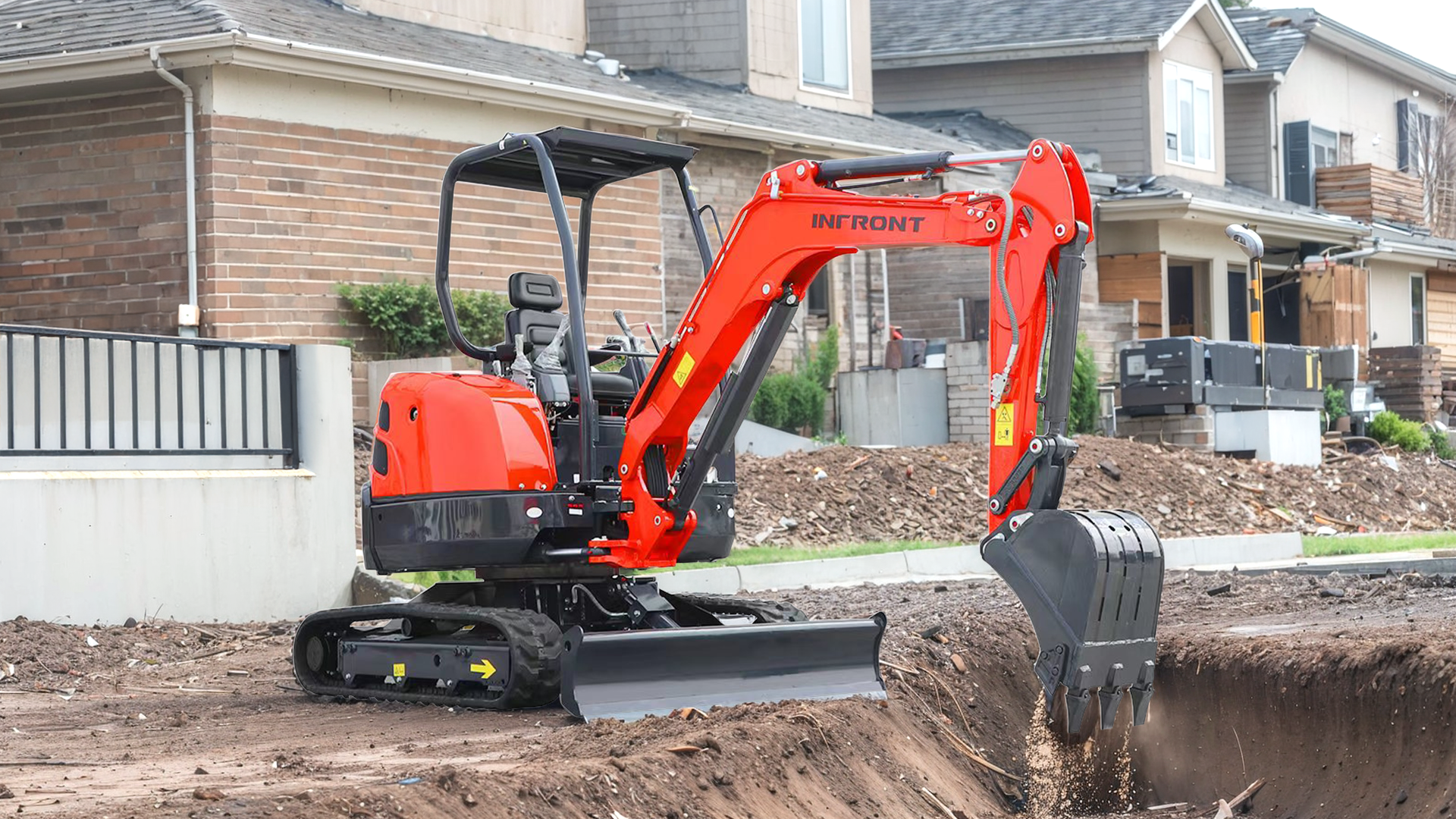
Maximizing total return on investment requires selecting machinery built for structural longevity, high fuel efficiency, and low maintenance overhead. Infront engineers high-performance compact earthmovers designed to lower total ownership costs for global contractors. Utilizing heavy-duty steel fabrications, fuel-efficient low-emission diesel engines, and precision-matched hydraulic systems, every machine manufactured by Infront delivers smooth digging performance and long component service life. Backed by efficient global supply chains, overseas warehousing, and rapid spare parts distribution, Infront ensures uninterrupted jobsite productivity, high asset resale value, and reliable operational support for growing fleets.