
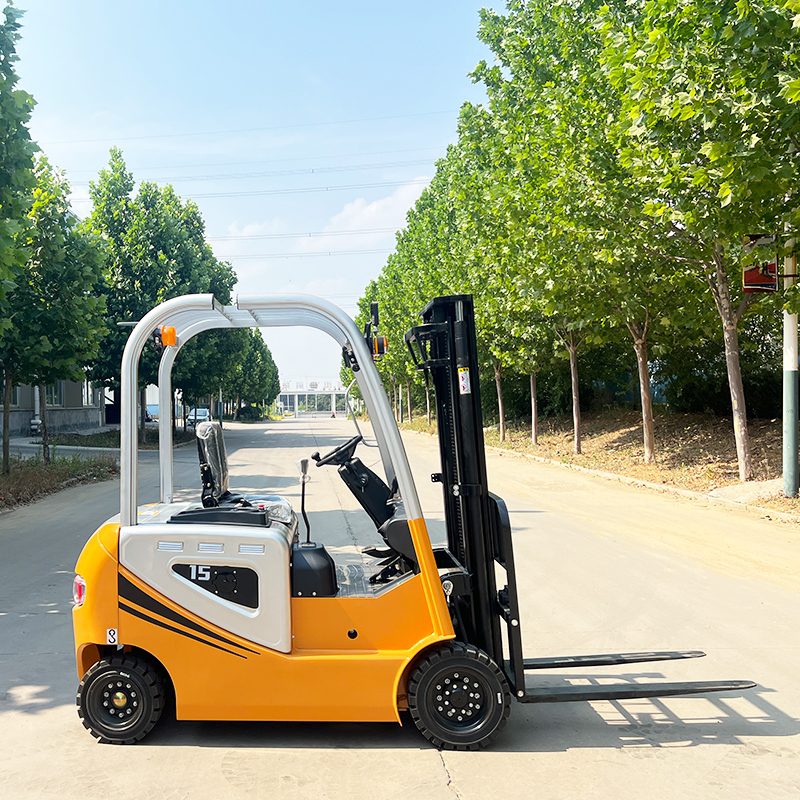
Shifting Beyond Brush Wear and High Maintenance Overhead
Industrial logistics centers and high-density warehouses are steadily phasing out outdated brushed DC motor technology in favor of modern alternating current drive systems. Older electric lift trucks relied heavily on physical carbon brushes and commutators to transfer electrical current within the drive housing. Over continuous multi-shift operations, carbon brushes naturally wear down, creating fine conductive carbon dust that coats internal electronics and causes short circuits. Replacing worn carbon brushes requires taking machines offline, tearing down motor housings, and incurring hefty repair bills that disrupt daily material flow. Upgrading fleet setups to modern
Boosting Energy Conversion Efficiency and Prolonging Battery Endurance
Battery life directly dictates how many pallets a warehouse team can move before needing a recharge break. Traditional brushed motors convert a significant portion of electrical power into wasted heat due to mechanical friction and internal resistance, draining battery packs prematurely. Brushless motor technology utilizes electronic commutation and solid-state MOSFET controllers to feed current precisely where and when it is needed. Modern
Precision Speed Control and Instant Torque at Low RPMs
Moving heavy pallet loads inside tight rack aisles demands millimeter-accurate acceleration and immediate hydraulic power. Brushed DC motors often suffer from delayed throttle response or jerky speed jumps when starting under heavy loads, increasing the risk of clipping warehouse rack uprights. Equipping high-performance
Harnessing Regenerative Braking to Reduce Mechanical Wear
Stopping a fully loaded lift truck using traditional friction service brakes generates intense heat and wears out brake shoes at an alarming rate. Brushless motor setups naturally double as high-efficiency generators the moment an operator releases the accelerator pedal or switches drive directions. When decelerating, modern
Sealed Motor Design for Cold Storage and Harsh Environments
Operating lift trucks in temperature-controlled cold storage vaults, dusty agricultural packing facilities, or outdoor loading docks exposes internal mechanical parts to harsh moisture and dirt contamination. Brushed motors require ventilation openings to dissipate brush heat, leaving internal windings vulnerable to water ingress, condensation short circuits, and abrasive dust buildup. Because brushless drives generate minimal internal heat, manufacturers enclose them in fully sealed IP-rated housings. Deploying durable
Lowering Total Cost of Ownership across High-Duty Fleets
While switching to advanced motor technology requires an initial capital investment, the long-term financial return makes brushless fleets an easy decision for fleet managers. Eliminating carbon brush replacements, extending brake shoe lifespans, lowering thermal battery stress, and reducing electricity consumption chop annual maintenance costs by more than half over the operational life of the machine. Running low-maintenance
Advancing Electric Fleet Performance with Infront Manufacturing Excellence
Achieving maximum warehouse productivity requires partnering with a machinery manufacturer that pairs cutting-edge drive engineering with robust structural quality.
Table of Contents
- Shifting Beyond Brush Wear and High Maintenance Overhead
- Boosting Energy Conversion Efficiency and Prolonging Battery Endurance
- Precision Speed Control and Instant Torque at Low RPMs
- Harnessing Regenerative Braking to Reduce Mechanical Wear
- Sealed Motor Design for Cold Storage and Harsh Environments
- Lowering Total Cost of Ownership across High-Duty Fleets
- Advancing Electric Fleet Performance with Infront Manufacturing Excellence